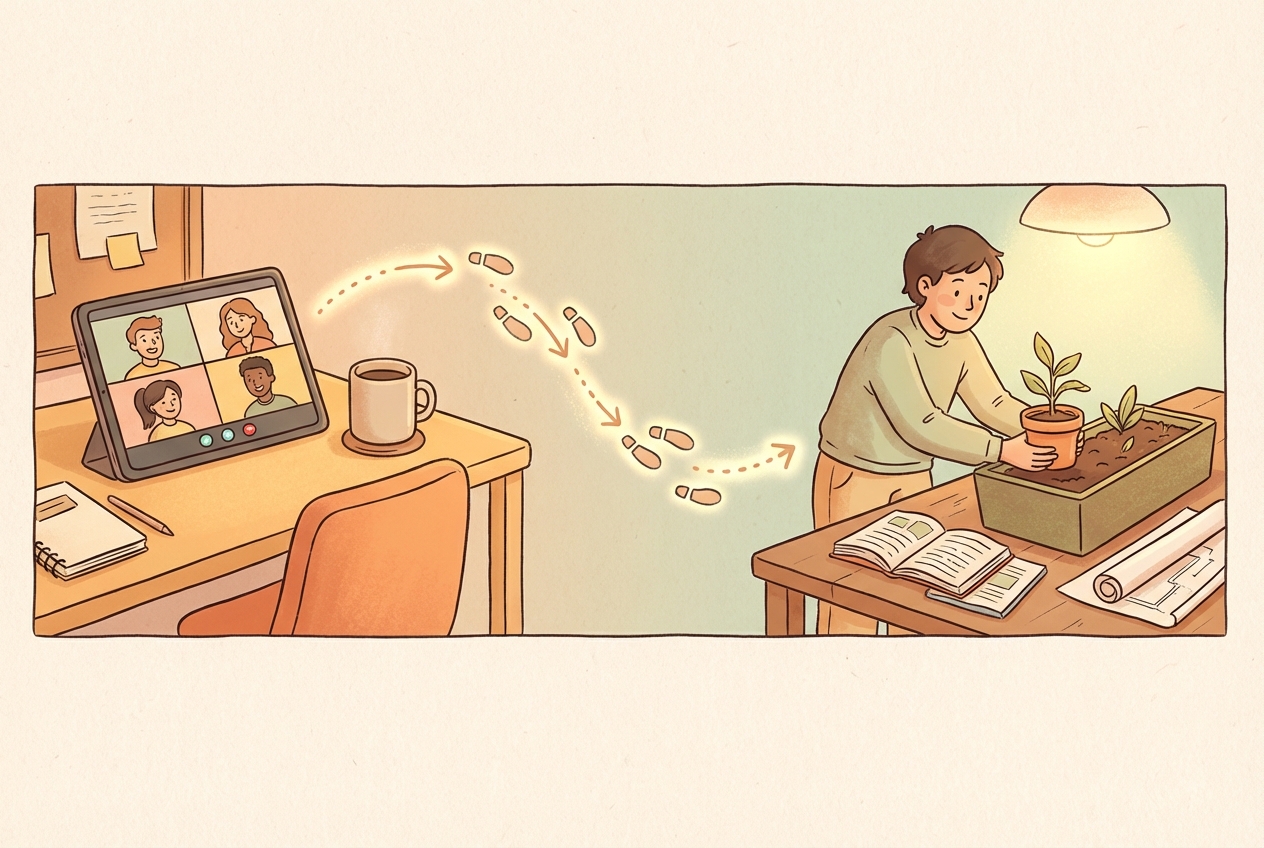

A fog settles over the mind. Decisions stall. Priorities blur. The mental noise grows louder, drowning out what matters most. This experience of cognitive overwhelm affects nearly everyone at some point. The brain, processing an estimated 70,000 thoughts daily, struggles to distinguish signal from noise. Learning how to get clarity in your thoughts becomes not a luxury but a necessity. Mental clarity represents the state where thinking feels sharp, focused, and purposeful. Achieving this state requires deliberate practice and specific techniques. The following five steps provide a systematic approach to cutting through mental clutter and restoring cognitive order. Each step builds upon the previous one, creating a comprehensive framework for clearer thinking.
Mental clutter manifests in several recognizable ways:
Difficulty making simple decisions
Feeling overwhelmed by routine tasks
Inability to focus on single activities
Persistent anxiety without clear cause
Procrastination on important matters
The cognitive load theory explains why this happens. Working memory holds only about four items simultaneously. When thoughts compete for this limited space, processing efficiency drops dramatically. Research from Princeton University found that visual clutter alone reduces working memory capacity and increases cortisol levels.
The consequences extend beyond mere inconvenience. Chronic mental clutter correlates with decreased productivity, impaired sleep quality, and heightened stress responses. The brain expends enormous energy simply managing competing thoughts rather than processing them effectively. This creates a feedback loop where mental exhaustion generates more scattered thinking.
The first step toward mental clarity involves removing thoughts from the mind entirely. Brain dumping transfers internal noise to an external medium. Paper or digital documents serve equally well. The goal remains consistent: empty the mental cache completely.
The process follows a simple protocol:
Set a timer for 10 to 15 minutes
Write continuously without editing or organizing
Capture every thought, regardless of importance
Avoid judgment about what emerges
Continue until the timer ends or thoughts stop flowing
This technique works because the brain treats unfinished tasks and unprocessed thoughts as open loops. Each open loop consumes mental resources. Externalizing these items closes the loops, freeing cognitive capacity for focused work.
Morning pages represent a specific brain dumping practice popularized by Julia Cameron. The technique involves writing three pages of longhand stream-of-consciousness text immediately upon waking. No topic restrictions apply. Grammar and coherence do not matter.
Morning pages offer distinct advantages:
Capture thoughts before daily distractions accumulate
Process overnight subconscious activity
Establish a daily clarity ritual
Reduce anxiety about forgotten ideas
The morning timing proves critical. The mind operates differently upon waking, with reduced self-censorship and greater access to subconscious material. This state allows deeper thought patterns to surface and be processed.
Mind mapping transforms linear thought dumps into visual structures. A central concept anchors the map. Related ideas branch outward in all directions. Colors, symbols, and images enhance the visual organization.
Mind maps leverage the brain's natural pattern recognition abilities. Spatial relationships between concepts become visible. Connections that remain hidden in linear notes emerge clearly. The visual format also aids memory retention and recall.
Software options like MindMeister or XMind offer digital alternatives. Paper and colored markers work equally well for those preferring analog methods.
Modern life delivers constant stimulation. Notifications, conversations, media, and environmental noise create perpetual input streams. The brain requires periods of reduced stimulation to process accumulated information effectively.
Strategic silence involves deliberate removal from stimulation sources. This differs from passive quiet. The practice requires intentional commitment to stillness, even when discomfort arises.
Benefits of regular silence practice include:
Reduced cortisol and stress hormones
Improved default mode network function
Enhanced creative problem-solving
Better emotional regulation
Even brief periods prove beneficial. Five minutes of intentional silence daily produces measurable cognitive improvements within weeks.
Meditation provides structured silence practice. Guided meditation adds verbal instruction, making the practice accessible for beginners. Apps like Headspace or Calm offer thousands of guided sessions ranging from three to sixty minutes.
Focused attention meditation specifically targets mental clarity. The practice involves concentrating on a single object, often the breath. When attention wanders, practitioners gently return focus to the chosen anchor. This trains the attention regulation systems that underpin clear thinking.
Research from Harvard Medical School demonstrated that eight weeks of meditation practice increased gray matter density in brain regions associated with learning, memory, and emotional regulation.
Digital devices represent the primary source of mental stimulation for most people. Constant connectivity fragments attention and prevents deep processing. A digital detox removes these interruptions temporarily.
Effective digital detox strategies:
Designate device-free hours daily
Remove social media apps from phones
Use website blockers during focus periods
Establish phone-free zones in living spaces
The initial discomfort of disconnection typically fades within 48 to 72 hours. What emerges is often surprising: clearer thinking, improved presence, and reduced anxiety.
Brain dumps generate raw material. Organization transforms that material into actionable clarity. Categorization groups related items together. Prioritization establishes sequence and importance.
Effective categories vary by individual needs. Common groupings include:
Work obligations
Personal relationships
Health and wellness
Financial matters
Creative projects
Household tasks
Each thought from the brain dump receives a category assignment. Orphan thoughts that resist categorization often reveal hidden concerns worth examining more closely.
The Eisenhower Matrix provides a proven prioritization framework. Four quadrants organize tasks by urgency and importance:
Urgent and important: Handle immediately
Important but not urgent: Schedule for focused attention
Urgent but not important: Delegate when possible
Neither urgent nor important: Eliminate entirely
Most mental clutter accumulates in quadrants three and four. Recognizing these items as low priority reduces their cognitive weight. The matrix also reveals when important matters receive insufficient attention due to urgency bias.
The mind-body connection operates bidirectionally. Physical states influence mental states. Movement breaks cognitive patterns and introduces fresh perspectives.
Exercise increases blood flow to the prefrontal cortex, the brain region responsible for executive function and decision-making. Even a ten-minute walk produces measurable improvements in creative thinking and problem-solving ability.
Movement options for mental clarity:
Walking, especially outdoors
Yoga or stretching routines
Swimming or cycling
Dance or rhythmic movement
Simple household tasks
The specific activity matters less than the transition from stillness to motion. Physical engagement redirects attention from circular thinking patterns. Solutions to persistent problems often emerge during or immediately after movement.
Mental clutter often includes unexamined assumptions masquerading as facts. These assumptions constrain thinking and generate unnecessary anxiety. Questioning these beliefs reveals their often arbitrary nature.
Common limiting beliefs include:
Perfectionism requirements
Catastrophic predictions
Mind-reading assumptions about others
Black-and-white categorizations
Should statements about self and world
Identifying these patterns requires honest self-examination. Once identified, each belief deserves scrutiny. Evidence for and against the belief receives equal consideration.
The Socratic method applies systematic questioning to examine beliefs. Originally developed for philosophical inquiry, the technique adapts well to personal reflection.
Key Socratic questions for self-examination:
What evidence supports this belief?
What evidence contradicts it?
What assumptions underlie this thought?
What would happen if the opposite were true?
How would someone else view this situation?
This questioning process often reveals that strongly held beliefs rest on weak foundations. Releasing these beliefs reduces mental burden significantly. The process also builds critical thinking skills applicable to future situations.
Achieving clarity in thoughts represents an ongoing practice rather than a one-time accomplishment. The five steps described above require regular repetition. Daily brain dumps prevent accumulation. Regular silence maintains processing capacity. Periodic prioritization keeps focus sharp.
Building sustainable habits involves starting small. One technique practiced consistently outperforms five techniques attempted sporadically. Gradual expansion allows each practice to become automatic before adding complexity.
Environmental design supports these practices. Dedicated spaces for reflection, reduced notification settings, and scheduled quiet time all reduce friction. The easier clarity practices become, the more consistently they occur.
Mental clarity compounds over time. Each session of focused thinking strengthens the neural pathways supporting that capacity. Decisions become easier. Anxiety decreases. Purpose emerges more clearly. The investment in these practices yields returns far exceeding the time committed.