
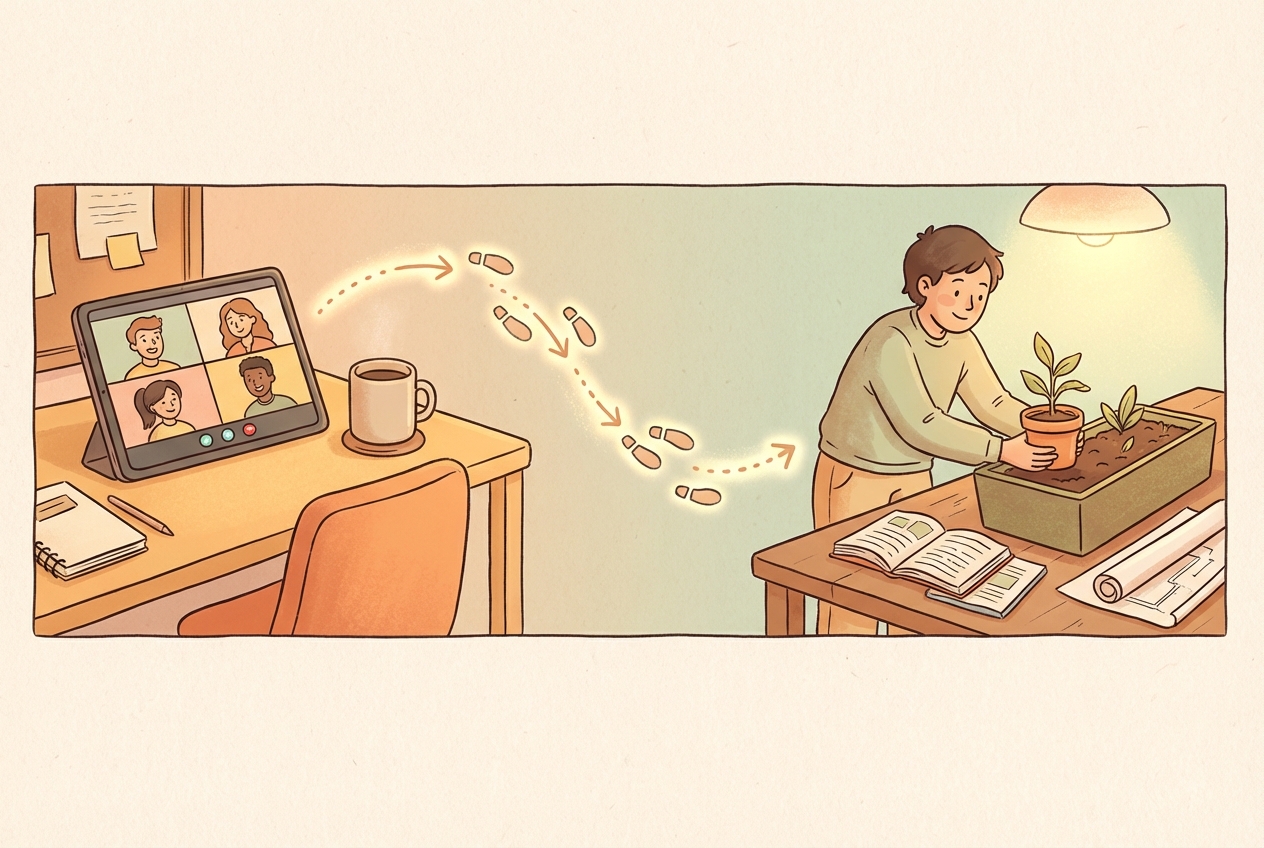
You've just wrapped up a Cohera session. Your mind buzzes with fresh perspectives, breakthrough ideas, and genuine clarity about problems that felt impossible an hour ago. But here's the uncomfortable truth: within 24 hours, you'll forget 70% of what you discussed. Within a week, those game-changing insights become vague memories you can't quite articulate.
The real work starts now. What you do after a Cohera session determines whether those takeaways transform into real-life action or fade into the graveyard of forgotten good intentions. This isn't about perfect note-taking or elaborate systems. It's about creating a simple bridge between insight and implementation.
Most people treat session insights like souvenirs from a vacation. They look nice on the shelf, but they don't change daily life. The difference between people who transform their sessions into results and those who don't comes down to the first 48 hours. That window determines everything.
Your Cohera session gave you raw material. Now you need to refine it into something you can actually use.
The minutes immediately following your session are precious. Your brain still holds connections and context that will disappear surprisingly fast. Capture now, organize later.
Not every insight deserves equal attention. Some revelations will reshape how you approach your work. Others are interesting but ultimately peripheral. Your job is to separate signal from noise.
Ask yourself three questions about each insight:
Does this change how I think about a core problem?
Can I act on this within the next two weeks?
Will this matter in six months?
If an insight scores yes on at least two questions, it's high-impact. Mark it clearly. These become your priority items. Everything else goes into a "review later" category.
The temptation is to treat everything as equally important. Resist it. Five focused actions beat twenty scattered intentions every time.
Raw session notes are messy by design. They capture thoughts as they emerge, not as they'll be used. Spend 15 minutes restructuring them while context remains fresh.
Group related ideas together. Identify themes that emerged repeatedly. Note any specific commitments you made or deadlines you mentioned. Create a separate section for questions that arose but weren't fully resolved.
Your future self will thank you for this investment. Unorganized notes become archaeological artifacts you'll never revisit. Structured notes become working documents that guide action.
Insights aren't tasks. "I need better boundaries" is an insight. "Decline non-essential meetings on Tuesdays and Thursdays" is a task. The gap between these two statements represents the difference between understanding and doing.
You've probably encountered SMART goals before. The framework works because it forces vague intentions into concrete commitments. Apply it ruthlessly to your session takeaways.
Each action item needs five elements:
Specific: What exactly will you do?
Measurable: How will you know it's done?
Achievable: Can you realistically accomplish this?
Relevant: Does this connect to your larger goals?
Time-bound: When will you complete it?
Transform "improve communication with my team" into "schedule weekly 15-minute check-ins with each direct report starting Monday." The second version has nowhere to hide. You either do it or you don't.
Your session probably generated more action items than you can tackle simultaneously. The Eisenhower Matrix helps you decide what gets attention first.
Plot each task on two axes: urgency and importance. This creates four quadrants. Urgent and important tasks get done immediately. Important but not urgent tasks get scheduled. Urgent but not important tasks get delegated if possible. Neither urgent nor important tasks get eliminated.
Most session insights fall into the important-but-not-urgent category. These are exactly the items that slip through the cracks without deliberate scheduling. Block time for them now, before daily firefighting consumes your calendar.
Action items that live only in your notes might as well not exist. They need to enter the systems you actually use every day. Integration isn't optional.
Whether you use Asana, Trello, Notion, or a simple to-do app, your session outputs need a home there. Create tasks immediately after organizing your notes. Don't wait until tomorrow.
Include context in each task description. Your future self won't remember why "contact Sarah about the proposal" mattered. Add the background: "Contact Sarah about the proposal because she mentioned budget flexibility during Q3 planning."
Link related tasks together. Many session insights create chains of dependent actions. Make those relationships visible in your system. This prevents the frustrating experience of completing step three before realizing you skipped step two.
Your calendar is your commitment device. If something isn't scheduled, it's just a wish.
Set reminders for:
Task deadlines
Progress check-ins
Follow-up sessions
Review points for longer-term initiatives
Be realistic about timing. Cramming too many session-related tasks into the first week creates overwhelm and abandonment. Spread them appropriately based on actual capacity.
Milestones matter for larger initiatives. If your session sparked a three-month project, identify checkpoints at weeks two, four, and eight. These become natural moments to assess progress and adjust course.
Solo accountability has limits. External structures dramatically increase follow-through rates. Build them deliberately.
Your first review should happen within 48 hours. This isn't a full analysis. It's a quick check: Have you started on your highest-priority items? Are your tasks properly captured in your systems? Do any deadlines need adjustment?
A deeper review happens at the one-week mark. Here you assess early progress, identify obstacles, and decide whether your priorities still make sense given what you've learned.
Monthly reviews connect individual sessions to longer patterns. What themes keep emerging? Which types of insights consistently translate into action? Which consistently stall? This meta-level awareness improves future sessions.
Telling someone else about your commitments creates social accountability. It also often surfaces practical considerations you missed.
Choose your accountability partner thoughtfully. They need enough context to provide useful feedback. They also need permission to follow up without awkwardness.
Share specific commitments, not general intentions. "I'm going to be more strategic" means nothing to an accountability partner. "I'm declining any meeting without a clear agenda this month" gives them something concrete to check on.
Consider sharing relevant action items with people they affect. If your session generated insights about improving a team process, the team should know. Their awareness creates both accountability and buy-in.
Turning session takeaways into real-life action isn't a one-time skill. It's a practice that improves with attention and iteration.
Track what happens to your session insights. Create a simple system: note each major insight, the action it generated, and the outcome. After three months, you'll have data about your actual conversion rate from insight to implementation.
This data reveals patterns. Maybe you consistently follow through on relationship-related actions but stall on systems changes. Maybe morning sessions generate better outcomes than afternoon ones. Maybe certain types of commitments need different support structures.
Use these patterns to refine both your sessions and your follow-through process. Adjust what you discuss, how you capture it, and how you implement it.
The goal isn't perfection. It's progress. Each session that generates even one meaningful change in your work or life compounds over time. Those compounds create the transformation that single insights never could.
Your next Cohera session will be more valuable because you treated this one seriously. The insights you implement become the foundation for deeper exploration. The actions you take create new questions worth examining.
Start with one high-impact item from your most recent session. Act on it today. Build from there.