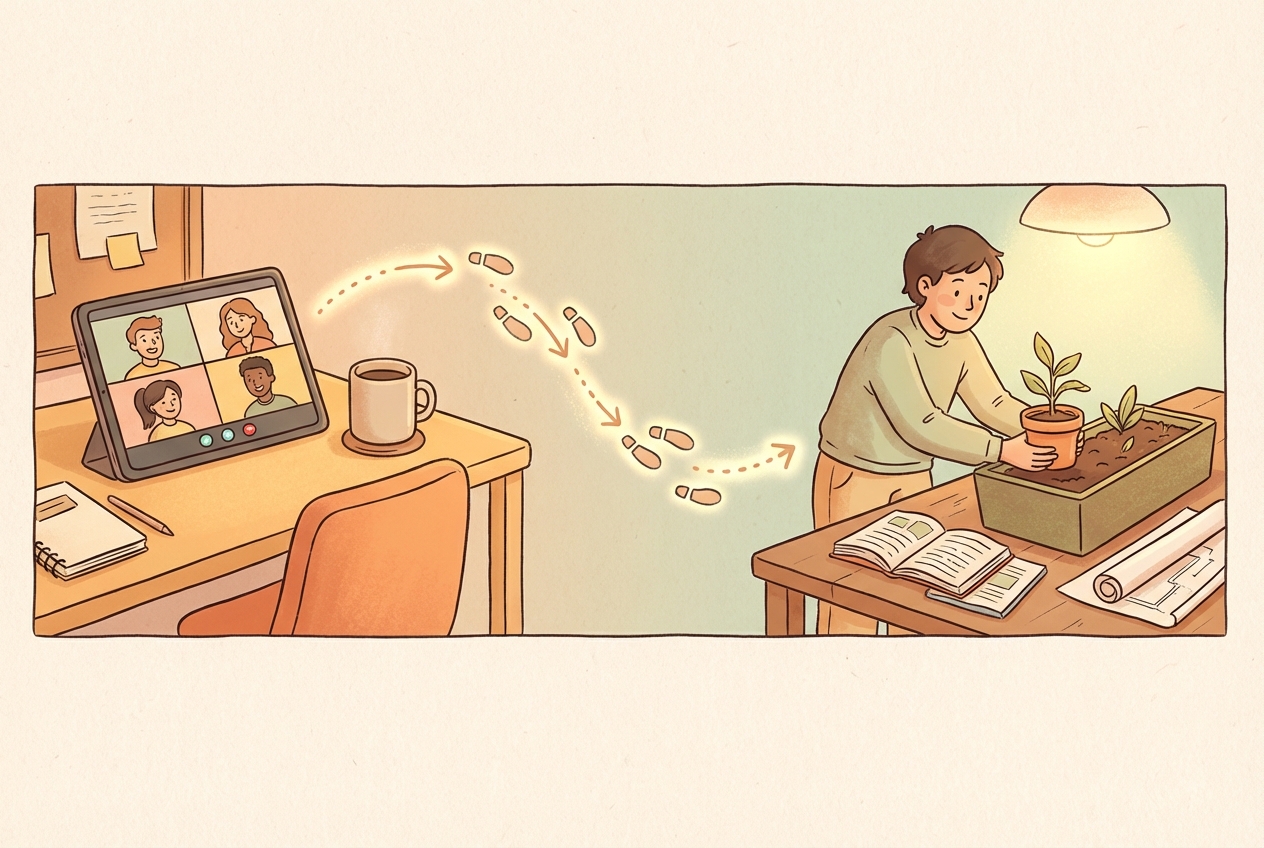

Your mind races through yesterday's mistakes, tomorrow's worries, and a dozen half-formed thoughts competing for attention. This mental noise isn't just exhausting. It blocks you from understanding what you actually want and need. Self-reflection offers a way through this chaos, but most people approach it wrong. They sit down to "think about things" and end up spiraling into rumination or simply spacing out. The difference between productive introspection and unproductive brooding comes down to having the right tools and techniques for inner clarity. A structured approach to self-reflection transforms vague self-awareness into genuine insight. You start recognizing patterns in your behavior, understanding your emotional triggers, and making decisions that align with your actual values. This isn't about navel-gazing or endless self-analysis. It's about developing a practical skill that helps you navigate life with greater intention and less reactive chaos.
Inner clarity means knowing what matters to you and why. It's the ability to distinguish between your genuine desires and the noise of external expectations. When you have it, decisions feel easier. You're not constantly second-guessing yourself or feeling pulled in conflicting directions.
Most people experience the opposite. They're drowning in information, opinions, and obligations. Social media feeds them curated versions of other people's lives. Work demands fragment their attention into tiny pieces. Clarity becomes nearly impossible when your mind never gets space to process anything deeply.
Research backs up what thoughtful people have known for centuries. A 2014 study in Psychological Science found that regular self-reflection improves emotional regulation and reduces anxiety. Participants who practiced structured introspection showed measurable improvements in decision-making quality.
The benefits compound over time:
Reduced stress through better emotional processing
Improved relationships from understanding your own patterns
Clearer career direction based on authentic values
Greater resilience when facing setbacks
Your brain literally changes with consistent reflective practice. Neural pathways associated with self-awareness strengthen, making future reflection more natural and productive.
Julia Cameron's "morning pages" technique remains one of the most effective reflection tools available. The method is simple: write three pages by hand, first thing in the morning, without stopping or censoring yourself. Content doesn't matter. You're clearing mental debris and accessing thoughts that normally stay buried.
The key is consistency over quality. Your pages might be boring complaints about being tired. That's fine. The practice trains your brain to externalize thoughts, making them easier to examine objectively. After several weeks, patterns emerge that surprise you.
Sometimes free-writing leads nowhere. Targeted prompts give your reflection direction when you need it. The best prompts challenge assumptions without triggering defensiveness.
Effective reflection prompts include:
What am I avoiding, and why?
When did I last feel completely engaged in something?
What would I do differently if I weren't afraid of judgment?
Which relationships drain me, and which restore me?
Rotate through different prompts weekly. Answer the same question multiple times across months and you'll see your thinking evolve.
Apps like Daylio and Pixels turn emotional awareness into data. You log your mood several times daily, adding notes about context. Over weeks, the app reveals patterns you'd never notice otherwise. Maybe your energy crashes every Thursday afternoon. Perhaps your mood improves dramatically on days you exercise before 9 AM.
This isn't about obsessive self-monitoring. It's about gathering information that makes your inner life less mysterious. You stop being surprised by your own reactions and start anticipating them.
Headspace, Calm, and Insight Timer offer structured paths into self-awareness. Their guided sessions teach you to observe your thoughts without getting swept away by them. This observational stance is fundamental to productive reflection.
Consider these platforms training wheels for attention. You're building the mental muscle needed for deeper solo reflection work. Start with five-minute sessions and gradually increase duration as your concentration improves.
The Johari Window divides self-knowledge into four quadrants: what you and others both know about you, what only you know, what only others know, and what nobody knows. The power comes from actively working to shrink your blind spots.
Ask trusted friends to describe your strengths and weaknesses. Their answers will include things you've never considered. This feedback, combined with your own reflection, creates a more complete self-portrait than either source alone.
The four quadrants work like this:
Open area: known to you and others
Hidden area: known only to you
Blind spot: known only to others
Unknown: hidden from everyone
Borrowing from business strategy, personal SWOT analysis maps your Strengths, Weaknesses, Opportunities, and Threats. The framework forces systematic thinking about your current position and future possibilities.
Be brutally honest in each category. Your strengths should be specific and evidence-based. Your weaknesses need acknowledgment without excessive self-criticism. Opportunities and threats require looking outward at your environment, not just inward at yourself.
Not everyone processes insight through words. Mind mapping lets you explore connections visually, drawing lines between related ideas and clustering themes. Software like Miro or old-fashioned paper both work well.
Vision boards take a different approach. You collect images representing your goals and values, arranging them where you'll see them regularly. The practice clarifies priorities by forcing you to choose what deserves visual real estate.
Your body holds information your conscious mind misses. Body scanning involves moving attention slowly through each body part, noticing sensations without trying to change them. Tension in your shoulders might signal stress you haven't acknowledged. A tight stomach could indicate anxiety about an upcoming conversation.
This somatic approach to reflection bypasses intellectual defenses. You can rationalize away emotions, but physical sensations are harder to ignore. Regular body scans build the mind-body connection that supports emotional intelligence.
You know reflection helps. You still don't do it consistently. This gap between intention and action is universal, and it has predictable causes.
Common resistance patterns include:
Perfectionism: waiting for the "right" time or method
Avoidance: fearing what you might discover
Busyness: treating reflection as optional when stressed
Impatience: expecting immediate breakthroughs
Combat these by starting smaller than feels useful. Two minutes of reflection beats zero minutes. Attach the habit to existing routines: reflect during your morning coffee or evening commute. Remove friction by keeping your journal visible and your apps easily accessible.
Reflection without action becomes self-indulgent rumination. Every reflection session should end with one small, concrete step. You noticed you feel resentful about a friendship imbalance. Your action might be scheduling a conversation to address it.
Track your insights and resulting actions in a simple format. Review monthly to see which changes stuck and which faded. Adjust your approach based on what actually works for you, not what theoretically should work.
The goal isn't perfect self-knowledge. It's continuous improvement in understanding yourself and living accordingly. Each reflection session adds to a cumulative picture that becomes clearer over time.
The tools and techniques for inner clarity work only when you actually use them. Start with one approach that appeals to you. Maybe that's morning pages, maybe it's a mood-tracking app, maybe it's weekly SWOT reviews. Master that single method before adding others.
Your reflection practice will evolve as you do. Techniques that feel forced initially become natural habits. Insights that once required effort start arriving spontaneously. The mental clarity you're seeking isn't a destination you reach and stay at forever. It's a capacity you build through consistent practice.
Pick your first tool today. Set a reminder for tomorrow morning. Begin with five minutes and see what emerges. Your future self, the one making better decisions and feeling less mentally cluttered, starts with this small commitment.