Your mind races before your feet hit the floor. The alarm sounds, and within seconds, you're scrolling through emails, absorbing other people's problems, and feeling behind before the day even starts. This pattern isn't accidental. It's a habit loop that keeps your nervous system in constant alert mode.
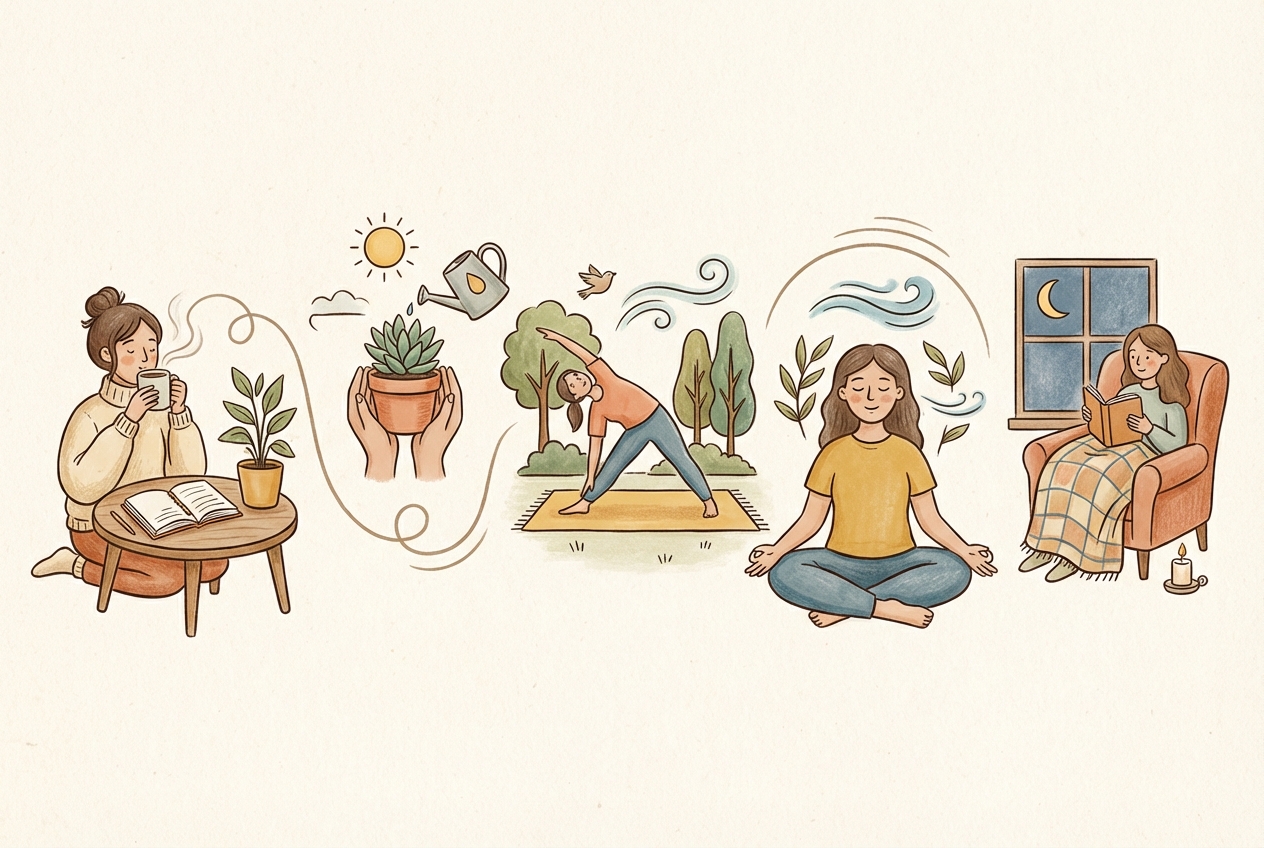
The good news? Small changes can interrupt this cycle. You don't need a meditation retreat or a complete lifestyle overhaul. What you need are tiny habits for a calmer mind that fit into the life you already have. These micro-practices take less than five minutes each, yet they create measurable shifts in how you experience stress. The key is consistency over intensity. A 30-second practice done daily beats a 30-minute practice done occasionally. Your brain responds to repetition, not grand gestures. These five small habits can help you build a calmer mind starting today, without adding another item to your already crowded to-do list.
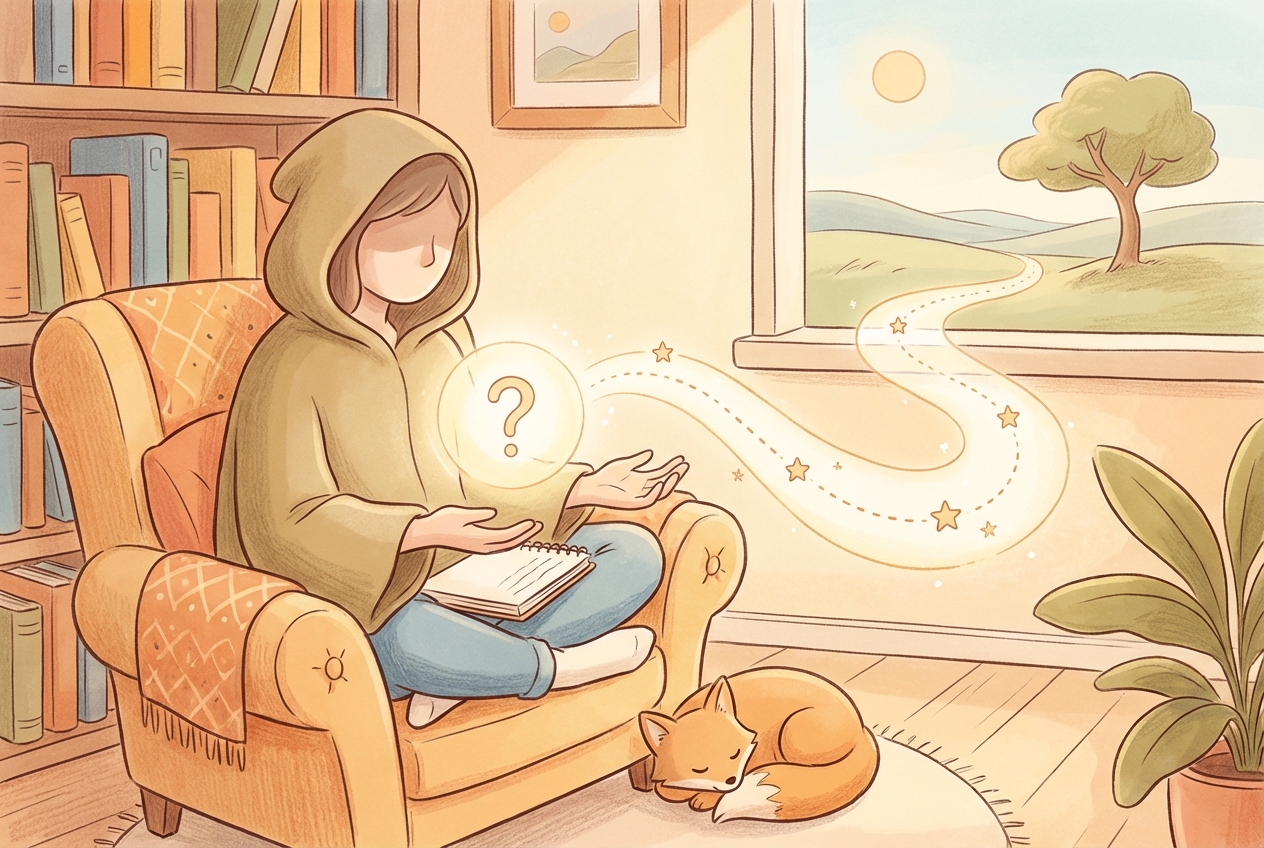
Your brain operates on neural pathways. The more you travel a particular route, the stronger it becomes. This is why anxious thoughts feel automatic: you've worn a groove into that mental road. Micro-habits work by creating alternative pathways. Each tiny practice is like clearing a new trail through dense forest.
Research from University College London found that habit formation takes an average of 66 days, but simpler behaviors become automatic faster. A habit requiring just 30 seconds faces less resistance than one demanding 30 minutes. Your brain's prefrontal cortex, responsible for decision-making, fatigues throughout the day. Small habits bypass this fatigue because they require minimal cognitive effort.
The compound effect matters here. One calm moment might seem insignificant. String together dozens of these moments across weeks, and you've fundamentally altered your baseline stress response. Think of it like compound interest for your mental health: small deposits, massive returns over time.
The first 60 seconds after waking shape your entire day's trajectory. When you immediately reach for your phone, you're handing control of your attention to algorithms, notifications, and other people's priorities. Your cortisol levels naturally peak in the morning. Adding digital stimulation to this biological spike creates a stress cocktail.
Instead, keep your phone across the room or in another space entirely. For just one minute after waking, do nothing digital. Stretch. Look out a window. Feel your feet on the floor. This brief pause creates a buffer between sleep and the day's demands.
Most people operate in reactive mode from the moment they wake. You respond to texts, react to news, and answer emails before you've even decided what you want from the day. This reactive pattern keeps your nervous system in a defensive posture.
Your brain interprets each notification as a potential threat requiring assessment
Reactive mode depletes willpower reserves you'll need later
Starting reactively makes proactive thinking harder throughout the day
Breaking this loop requires creating space before input floods in. That one minute of tech-free time isn't about productivity. It's about reclaiming agency over your own attention.
During your tech-free minute, ask yourself one question: what would make today feel successful? This isn't about cramming more tasks into your schedule. It's about identifying what actually matters to you before external demands take over.
Your intention might be simple: stay patient during a difficult meeting, take a real lunch break, or connect with a friend. Writing it down increases follow-through, but even a mental note creates direction. You're programming your own priorities before the world programs them for you.
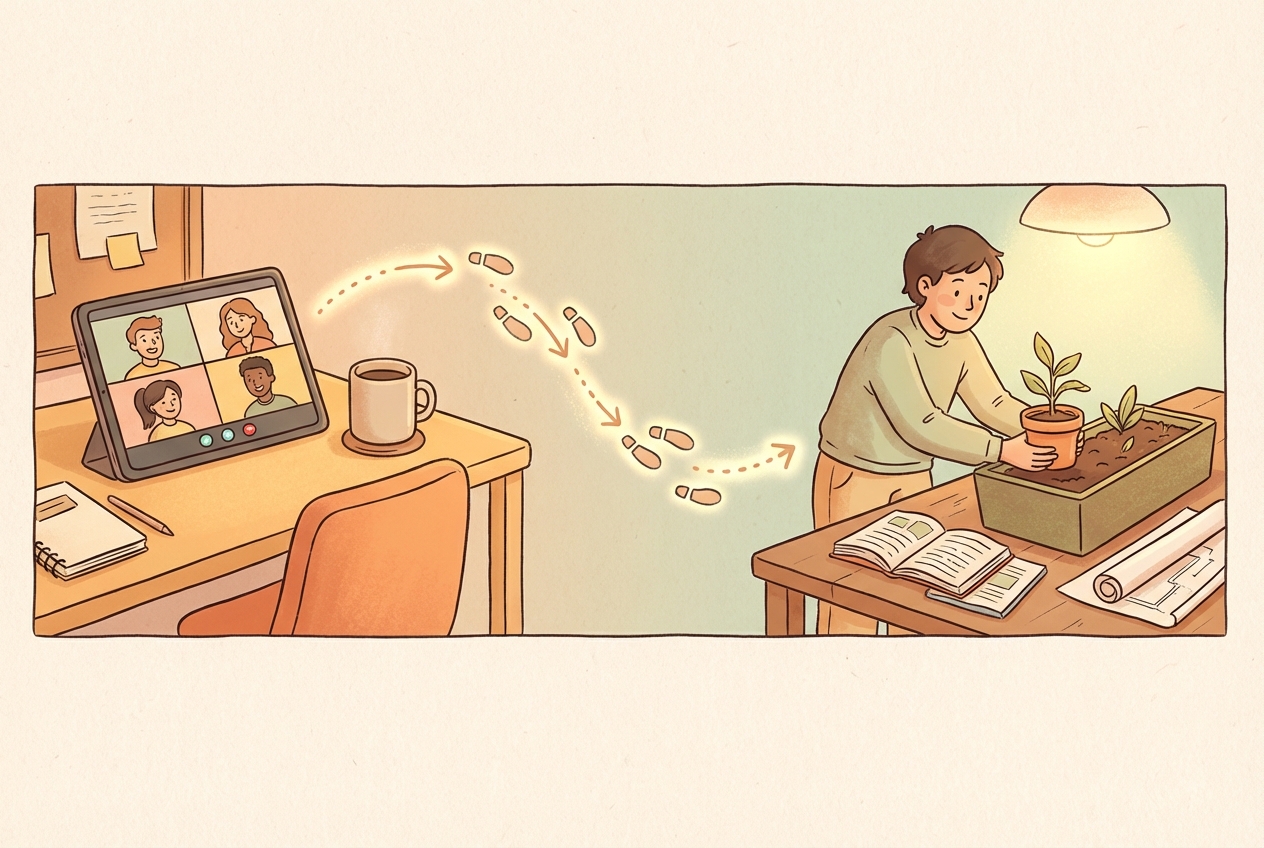
Transitions are stress accelerators. Moving from one task to another, commuting between locations, or shifting from work mode to home mode creates cognitive friction. Your brain struggles to release the previous context while engaging with the new one.
Box breathing uses a simple pattern: inhale for four counts, hold for four counts, exhale for four counts, hold empty for four counts. One complete cycle takes about 16 seconds. Three cycles take less than a minute. Navy SEALs use this technique before high-stress operations because it reliably activates the parasympathetic nervous system.
Your autonomic nervous system has two modes: sympathetic (fight-or-flight) and parasympathetic (rest-and-digest). Modern life keeps most people stuck in sympathetic dominance. Your body thinks it's constantly under threat, even when you're just sitting in traffic.
Extended exhales signal safety to your brainstem
Breath holds create a brief CO2 buildup that triggers relaxation responses
Rhythmic breathing patterns interrupt anxious thought loops
Practicing box breathing during transitions creates natural reset points throughout your day. Before entering a meeting, after finishing a task, while waiting for your computer to boot: these micro-moments become opportunities for nervous system regulation. You're not adding time to your day. You're using existing pauses more intentionally.
Your coffee break probably isn't a break at all. You drink while scrolling, eating while emailing, resting while planning. This constant multitasking keeps your brain in a fragmented state. Attention residue from previous tasks lingers, preventing true mental rest.
Single-tasking your coffee break means doing one thing: drinking coffee. No phone. No conversation. No reading. Just you and the cup for three to five minutes. This practice sounds almost absurdly simple, which is exactly why it works. Simplicity removes barriers to consistency.
Sensory engagement anchors your attention to the present moment. When your mind wanders to tomorrow's deadline or yesterday's mistake, your senses can only report what's happening now.
Notice the warmth of the cup against your palms
Observe the steam rising and dissipating
Taste each sip as if it were your first
Listen to the ambient sounds around you
Watch the liquid's surface as you tilt the cup
This isn't meditation in the traditional sense. You're not trying to achieve a special state. You're simply practicing undivided attention on a single experience. This skill transfers to other areas: listening to a colleague, focusing on a project, being present with family. Your coffee break becomes training for a calmer, more focused mind.
Your working memory has limited capacity. Researchers estimate it holds about four chunks of information at once. When you try to remember tasks, ideas, and worries simultaneously, you exceed this capacity. The overflow creates a persistent sense of mental clutter.
A brain dump transfers information from your mind to an external system. Keep a small notebook or notes app accessible. Whenever you notice mental clutter building, take 30 seconds to write down everything occupying your thoughts. Don't organize. Don't prioritize. Just dump.
The act of writing creates psychological closure. Your brain can release information once it's been captured somewhere reliable. This is why you remember things you need to buy at the worst possible moments: your mind keeps cycling through uncaptured tasks.
Unwritten tasks consume mental bandwidth even when you're not actively thinking about them
Capturing thoughts externally frees cognitive resources for present-moment engagement
Regular brain dumps prevent the accumulation that leads to overwhelm
You don't need to act on everything you capture. The point is transfer, not completion. Review your brain dumps weekly and decide what actually deserves attention. Most items lose their urgency once externalized. You'll wonder why they felt so pressing in the first place.
Your brain has a negativity bias. Evolutionarily, remembering threats mattered more than remembering pleasures. This bias means negative experiences stick while positive ones slide away. Without intervention, your mental landscape tilts toward anxiety and dissatisfaction.
Micro-gratitude takes 30 seconds before sleep. Identify one specific good thing from your day. Not a vague "I'm grateful for my health" but a concrete moment: the way sunlight hit your desk at 3 PM, a joke that made you laugh, the taste of a particular meal. Specificity matters because it requires genuine recollection rather than rote repetition.
Neuroplasticity means your brain physically changes based on what you repeatedly think. Gratitude practice isn't about toxic positivity or ignoring real problems. It's about deliberately strengthening neural pathways for noticing good things.
Specific gratitude activates memory systems more than generic statements
Bedtime practice influences sleep quality and dream content
Consistent practice measurably increases baseline happiness within weeks
This habit costs nothing and takes almost no time. Yet research consistently shows gratitude practice among the most effective interventions for mental wellbeing. You're ending each day by telling your brain what to look for tomorrow. Over time, you'll notice good things more automatically because you've trained yourself to spot them.
These five tiny habits for a calmer mind work because they respect how change actually happens. Dramatic transformations rarely stick. Small, consistent practices compound into significant shifts. You're not trying to become a different person. You're adjusting your daily patterns by minutes, not hours.
Start with one habit. Master it over two weeks. Then add another. Stacking too many changes at once guarantees failure. Your willpower is finite, and new behaviors require conscious effort until they become automatic.
The goal isn't perfection. Missing a day doesn't erase your progress. What matters is returning to the practice without self-criticism. A calmer mind isn't achieved through force. It emerges from gentle, repeated redirection of your attention toward what serves you. These small habits create the conditions for peace. Your job is simply to show up for them, one tiny moment at a time.