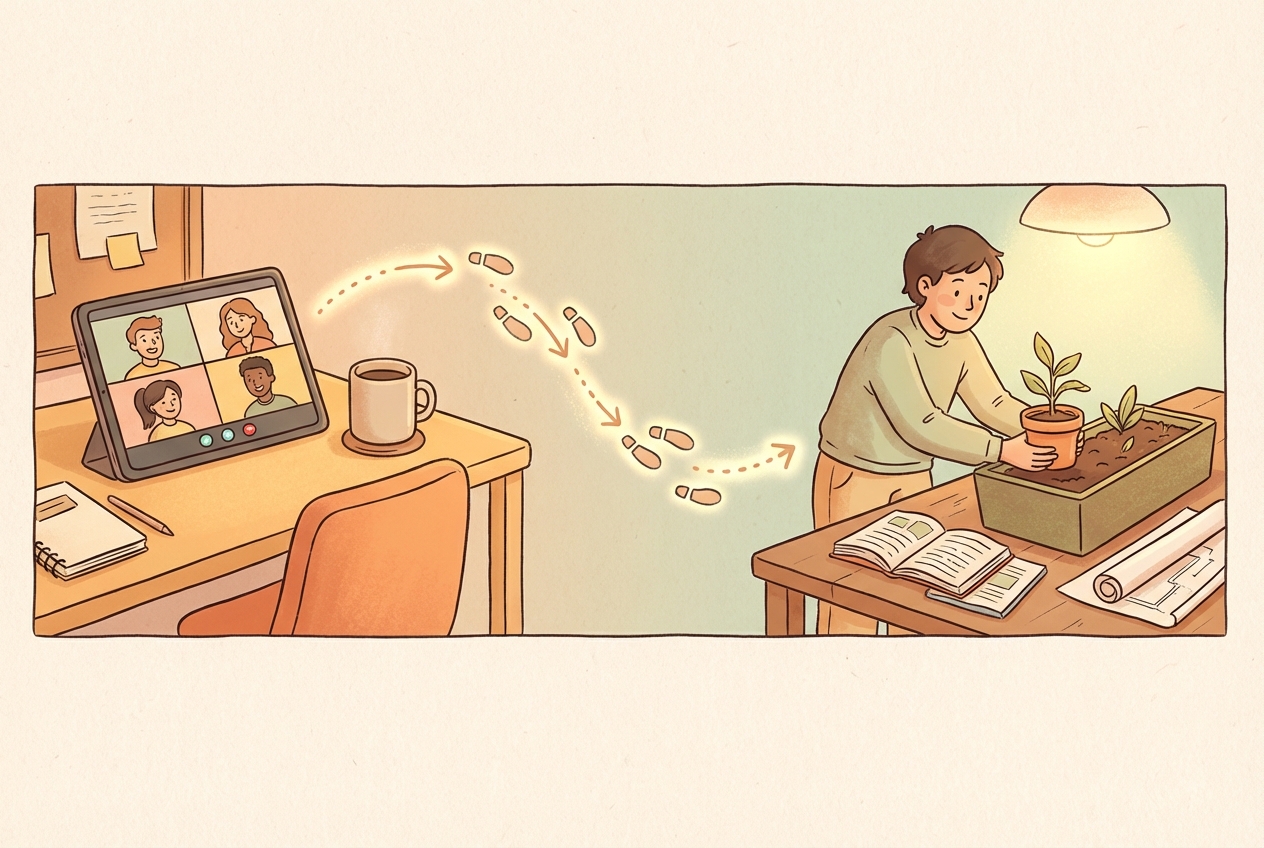

Personal growth has long existed within the confines of clinical settings. Therapy offices. Diagnostic manuals. Symptom checklists. Yet a fundamental shift is occurring. The question is no longer simply "What is wrong?" but rather "What is possible?" This reframing represents a departure from deficit-based models toward something more expansive. Cohera sits at this intersection, offering a framework that moves beyond therapy to redefine personal growth and clarity for those seeking more than symptom relief. The platform addresses a gap that traditional mental health services were never designed to fill. High-functioning individuals often find themselves in a peculiar position. They do not meet clinical thresholds for intervention. Yet they sense untapped potential, unrealized capacity, a persistent feeling that more exists within reach. This space between pathology and peak performance has remained largely unaddressed until now. The approach here is not anti-therapy. Rather, it acknowledges that different stages of human development require different tools.
Mental health infrastructure was built for crisis intervention. Hospital systems. Insurance models. Diagnostic frameworks. All designed around identifying and treating dysfunction. This architecture served its purpose. Millions have benefited from clinical care. However, the system leaves a significant population underserved: those functioning adequately but aspiring to thrive.
Traditional therapy operates within specific parameters:
Diagnosis-driven treatment protocols
Insurance reimbursement requirements
Focus on returning to baseline functioning
Time-limited intervention models
High performers require something different. They seek optimization, not just stabilization. The gap between clinical mental health and peak performance coaching has historically been vast. Cohera occupies this middle ground, offering structured growth without pathologizing the desire for improvement. The methodology acknowledges that clarity and personal development are not luxuries. They are operational necessities for those navigating complex professional and personal landscapes.
Symptom reduction represents the floor, not the ceiling. Traditional models measure success by absence: absence of depression, absence of anxiety, absence of dysfunction. Cohera measures success by presence: presence of purpose, presence of clarity, presence of sustained momentum. This distinction matters. Self-actualization requires different metrics entirely. Growth becomes measurable through expanded capacity, not diminished distress.
Compartmentalization has been the default approach. Work stress stays at work. Relationship challenges remain separate from career concerns. This artificial separation creates friction. Human experience does not operate in silos. Cohera recognizes this fundamental truth and builds frameworks accordingly.
Effective personal development requires both analytical and emotional competencies. Cognitive understanding without emotional integration produces insight without transformation. Emotional processing without cognitive frameworks produces catharsis without direction. The Cohera model combines:
Evidence-based cognitive restructuring techniques
Somatic awareness practices for embodied change
Behavioral activation protocols for momentum building
Reflective exercises for meaning-making
This integration produces durable change. Knowledge becomes embodied. Insights translate into action. The gap between knowing and doing narrows considerably.
Willpower is finite. Motivation fluctuates. Sustainable growth requires systemic redesign, not just increased effort. Cohera approaches habit formation through environmental modification and identity-level shifts. The focus extends beyond individual behaviors to the contexts that shape them. A system designed for growth produces growth. A system designed for maintenance produces stagnation.
Generic advice produces generic results. The challenges facing individuals today are specific, contextual, and often unprecedented. Career trajectories no longer follow predictable paths. Relationship structures have diversified. Information overwhelm is constant. Effective frameworks must adapt to these realities.
Static programs fail because people are not static. Cohera employs adaptive methodologies that respond to user progress and changing circumstances:
Assessment protocols that evolve with the user
Content delivery calibrated to current capacity
Pacing adjustments based on integration rates
Feedback loops that inform ongoing recommendations
This responsiveness prevents the common pitfall of one-size-fits-all personal development programs. What works at one stage may hinder progress at another. Adaptive models account for this natural variation.
Quantification has limits. Human experience resists complete measurement. Yet certain data points provide valuable feedback. Sleep patterns. Energy fluctuations. Mood trends. Behavioral consistency. Cohera incorporates these metrics without reducing the human experience to numbers. Data serves as one input among many. It informs rather than dictates. The goal is enhanced self-awareness, not algorithmic living. Users gain insight into patterns they might otherwise miss while maintaining agency over interpretation and response.
Constant connectivity creates constant demands. Notifications. Expectations. Comparisons. The nervous system was not designed for perpetual stimulation. Resilience in this context requires deliberate cultivation. It does not emerge automatically.
The Cohera approach to resilience building includes several components. First, attention management protocols that protect cognitive resources. Second, boundary-setting frameworks appropriate for digital environments. Third, recovery practices that counterbalance chronic activation. Fourth, perspective-taking exercises that reduce reactivity to external events.
Resilience is not about becoming impervious. It is about developing capacity for recovery and adaptation. The hyper-connected world will not slow down. Individual capacity for navigating it can increase substantially with proper training and support structures.
Individual growth occurs within relational contexts. Isolation limits development. Shared experience accelerates it. The wisdom of others who have navigated similar challenges provides both practical guidance and psychological support. Cohera integrates community elements thoughtfully, avoiding the pitfalls of superficial networking.
Effective peer support differs from casual social connection. It requires:
Shared commitment to growth
Structured interaction formats
Accountability mechanisms
Confidentiality and psychological safety
Diversity of perspective within common purpose
These networks multiply individual effort. Insights gained by one member benefit others. Challenges faced by one receive input from many. The collective intelligence of a well-designed peer network exceeds what any individual could access alone. Cohera facilitates these connections while maintaining quality standards that protect the integrity of the community.
The trajectory is clear. Personal development will continue moving beyond clinical models toward growth-oriented frameworks. Technology will enable personalization at scale. Community will remain essential despite digital mediation. The individuals and organizations that thrive will be those who invest in systematic approaches to growth and clarity.
Cohera represents one iteration of this future. The platform combines evidence-based methodology with adaptive technology and community support. It addresses the gap between traditional therapy and the needs of high-functioning individuals seeking continued growth. The question is no longer whether such approaches are necessary. Market demand has answered that conclusively. The question is which frameworks will prove most effective over time.
Those ready to move beyond conventional approaches to personal development will find structured pathways here. The tools exist. The methodologies are established. The community awaits. What remains is the decision to engage. Human flourishing is not accidental. It is cultivated through deliberate practice, appropriate support, and sustained commitment. The future belongs to those who build capacity for it today.