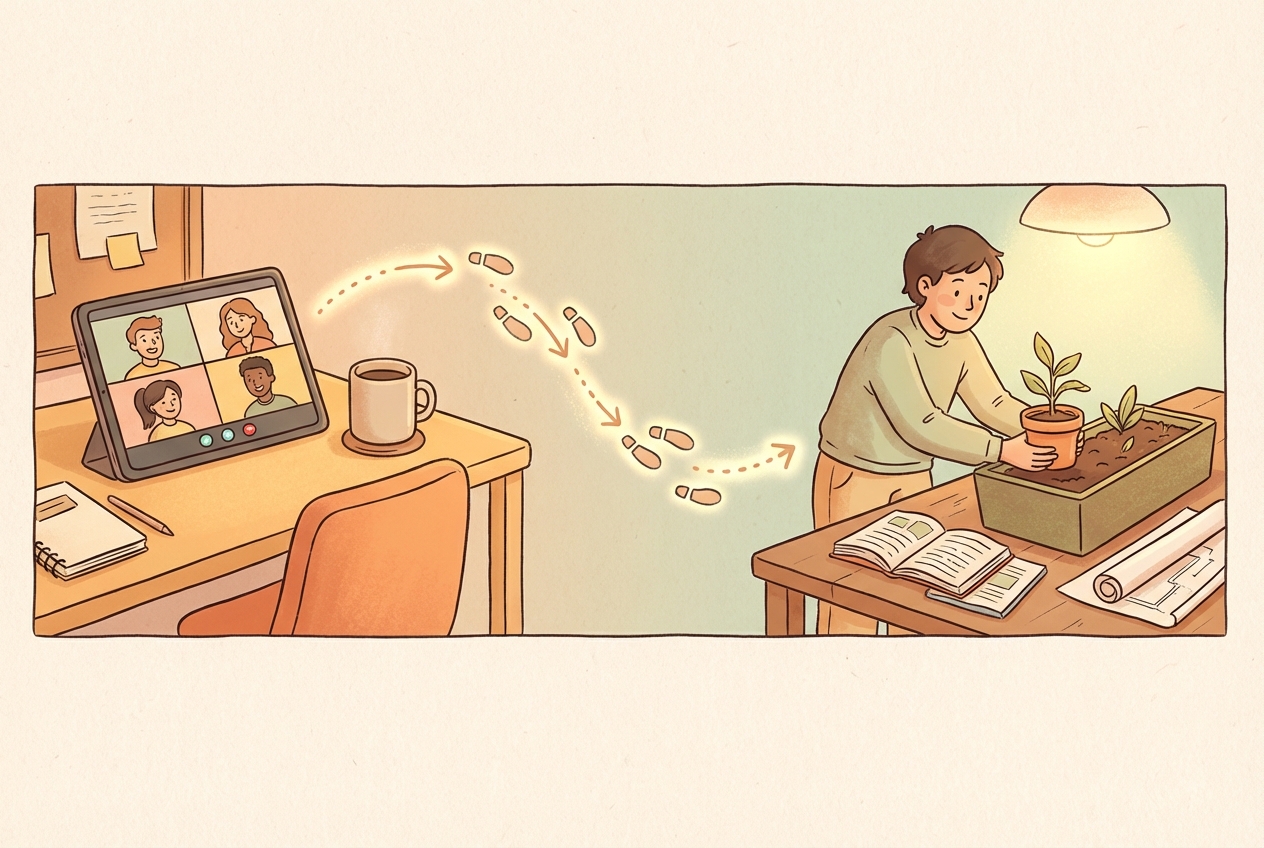

Your mind races at 3 a.m. The to-do list multiplies. Deadlines blur together. Sound familiar? That crushing sensation when thoughts pile up faster than you can process them affects nearly everyone. Feeling overwhelmed happens when your brain tries to hold too much at once. The good news? You can untangle your thoughts in minutes with the right approach. Mental clutter isn't permanent. It's a signal that your processing system needs a reset. The five steps ahead will help you move from chaos to clarity without requiring hours of meditation or expensive therapy. These techniques work whether you're facing work stress, personal challenges, or that vague sense that everything's too much. Your brain wants order. Let's give it the tools to find it.
Mental overload doesn't always announce itself clearly. Sometimes it sneaks up disguised as tiredness or irritability. You might find yourself rereading the same email three times. Or standing in a room wondering why you walked in. These moments signal that your mental bandwidth is maxed out.
When your mind holds too many competing thoughts, your attention fractures. You start tasks but don't finish them. Conversations become hard to follow because your brain keeps drifting elsewhere.
Decision fatigue sets in for even small choices
Creative thinking drops significantly
Memory recall becomes unreliable
Time perception warps, making hours feel like minutes
Your prefrontal cortex, responsible for executive function, essentially overheats. It wasn't designed to juggle dozens of open loops simultaneously.
Your body keeps score of mental chaos. Tension headaches creep up the back of your neck. Your shoulders inch toward your ears without you noticing.
Watch for these physical red flags:
Shallow breathing or breath-holding
Clenched jaw or grinding teeth
Restless legs or fidgeting
Disrupted sleep patterns
Digestive issues
These symptoms often appear before you consciously recognize feeling overwhelmed. Paying attention to your body gives you early warning.
The brain dump is your first line of defense. It's simple: transfer everything in your head onto an external surface. Don't organize. Don't judge. Just capture every thought, worry, task, and random idea demanding mental space.
Your working memory holds roughly seven items at once. Most people try to track fifty. That mismatch creates the overwhelm sensation. When you externalize thoughts, you free up cognitive resources.
Spend ten minutes writing without stopping. Include everything from "call dentist" to "worried about mom's health" to "remember to buy milk." The goal isn't pretty prose. It's emptying your mental inbox completely.
Both approaches work. The best choice depends on your personal wiring.
Paper benefits:
Tactile engagement helps processing
No notification distractions
Physical act of writing slows racing thoughts
Digital benefits:
Easier to reorganize later
Searchable and accessible anywhere
Integrates with task management systems
Try both methods over a week. Notice which one leaves you feeling more relief afterward.
Raw brain dumps create their own chaos. A jumbled list of 47 items can feel as overwhelming as keeping them in your head. The next step brings structure to the mess.
This framework sorts tasks into four quadrants based on urgency and importance:
Urgent and important: handle these first
Important but not urgent: schedule dedicated time
Urgent but not important: delegate if possible
Neither urgent nor important: eliminate or ignore
Most people spend too much energy in quadrant three. Those tasks feel pressing but don't actually matter much. Recognizing this pattern changes how you allocate attention.
Some items on your list don't deserve space there. They're obligations you've inherited rather than chosen. They're worries about situations you can't control.
Circle anything that falls into these categories:
Other people's emergencies that aren't yours
Future scenarios that may never happen
Commitments made from guilt rather than genuine desire
Problems already being handled by someone else
Crossing these off isn't irresponsible. It's honest about where your energy should go.
Big tasks paralyze. "Fix my career" sits on a list for months because it's not actually a task. It's a project containing dozens of smaller steps. Your brain resists starting because it can't see a clear first move.
Every overwhelming item needs translation into specific, physical actions. "Improve finances" becomes "log into bank account and review last month's spending." "Get healthier" becomes "walk around the block after lunch today."
The magic threshold is two minutes or less for your first step. If the initial action takes longer, break it down further. You're not trying to solve everything immediately. You're creating momentum through achievable wins.
This approach works for emotional overwhelm too. "Process feelings about breakup" might become "write for five minutes about what I'm feeling right now." Vague emotional weight transforms into concrete action.
Sometimes your brain needs a hard stop rather than more processing. Mindful disengagement means intentionally stepping away from the thought spiral. This isn't avoidance. It's strategic recovery.
You don't need an hour-long meditation retreat. Five minutes of intentional presence can interrupt the overwhelm cycle effectively.
Try this quick reset sequence:
Close your eyes and take five slow breaths
Notice three things you can hear right now
Feel your feet against the floor
Name one thing you're grateful for today
Open your eyes and choose your next single action
This practice pulls your attention from abstract worries into concrete present-moment experience. Your nervous system calms. Your perspective shifts. The problems remain, but your relationship to them changes.
One-time interventions help in crisis moments. Lasting mental clarity requires ongoing practices. Think of this like dental hygiene for your mind. Regular maintenance prevents painful emergencies.
Racing thoughts at bedtime often stem from unprocessed mental residue. A brief evening ritual clears this buildup before it compounds.
Spend five minutes before bed with these prompts:
What went well today?
What's still bothering me?
What's my most important task tomorrow?
Writing answers down matters. The act of externalizing tells your brain it can stop holding these thoughts. Sleep quality improves when your mind isn't running overnight processing loops.
Your brain can only handle so much input. Modern life delivers far more than that threshold. Protecting your mental space requires active boundary-setting.
Consider these information diet adjustments:
Check news twice daily at set times, not constantly
Turn off non-essential notifications
Unfollow accounts that trigger anxiety
Create phone-free zones in your home
Schedule specific times for email rather than checking continuously
Every piece of information demands processing resources. Reducing intake frees capacity for what actually matters to you.
Mental overwhelm isn't a character flaw or permanent condition. It's a signal that your system needs adjustment. The five steps outlined here work because they address root causes rather than symptoms.
Start with the brain dump when thoughts spiral. Categorize to find what actually deserves your energy. Break big items into small actions. Take mindful breaks when needed. Build maintenance habits that prevent future buildup.
You don't need to implement everything at once. Pick one technique that resonates and practice it for a week. Notice what shifts. Add another tool when you're ready.
Your mind has remarkable capacity for clarity when given the right support. These practices aren't about becoming superhuman. They're about working with your brain's natural design rather than against it. The overwhelm you're feeling right now? It's temporary. The skills you build to manage it last a lifetime.