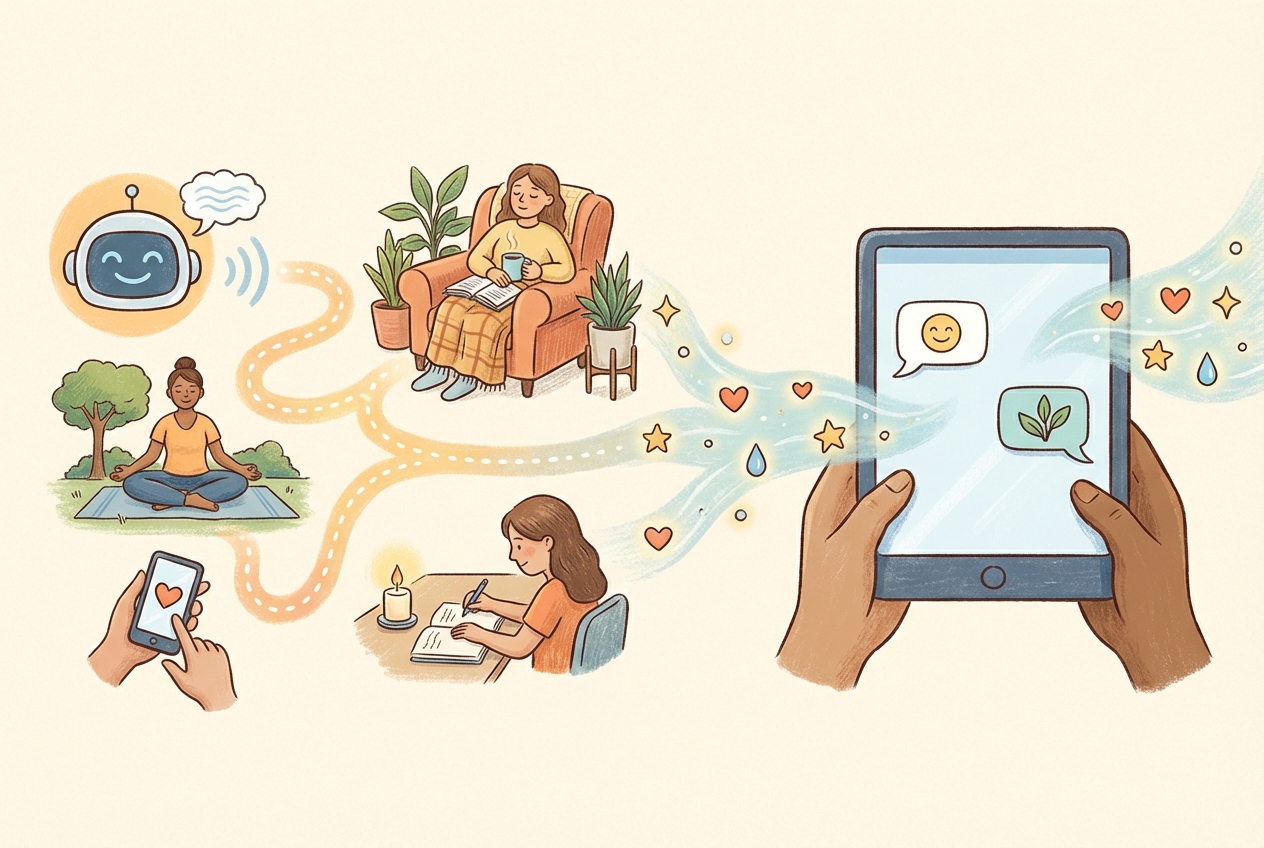
Your phone buzzes at 2 AM. You can't sleep, anxiety gnawing at your chest. A therapist's office won't open for hours. Friends are asleep. But your digital companion is ready to help. Chatbots are reshaping self-care routines for millions who need support outside traditional hours. These AI-powered tools have evolved from clunky scripts into sophisticated wellness partners. They track your moods, guide your breathing, and offer evidence-based coping strategies. The mental health app market has exploded, with downloads increasing 200% since 2020. People are turning to these virtual assistants not to replace human connection, but to supplement it. Whether you're managing chronic stress or simply building better habits, chatbots now offer personalized guidance that fits your schedule. They meet you where you are, whenever you need them.
Mental health technology has transformed dramatically over the past decade. Early chatbots offered little more than pre-programmed responses to specific keywords. Today's AI companions understand context, remember your history, and adapt their approach based on your needs.
The first wellness chatbots operated on simple decision trees. You'd type "sad," and they'd offer a generic response about sadness. These rigid systems frustrated users quickly. Modern chatbots use natural language processing to understand nuance. They recognize when you're venting versus seeking advice. They pick up on subtle cues in your word choices.
Key developments include:
Machine learning algorithms that improve with each conversation
Sentiment analysis that detects emotional undertones
Personalized response generation based on your communication style
Integration with wearable devices for physiological data
The shift to generative AI has made conversations feel remarkably natural. These systems don't just retrieve answers; they construct responses tailored to your specific situation.
Traditional therapy remains inaccessible for many people. Cost, location, and stigma create significant obstacles. Chatbots eliminate several of these barriers instantly. They're affordable or free. They're available in rural areas with limited providers. They don't require you to sit in a waiting room.
Research shows that 74% of users feel more comfortable discussing sensitive topics with AI than with humans initially. This comfort creates an entry point for people who might never seek professional help otherwise.
Generic wellness advice rarely sticks. You've probably read the same tips about drinking water and getting eight hours of sleep dozens of times. Chatbots change this equation by learning your specific patterns and triggers.
Not everyone responds to the same meditation techniques. Some people thrive with body scans. Others prefer visualization. AI companions track which exercises you complete, which you skip, and how you rate your experience afterward.
Over time, they build a profile of what works for you:
Preferred session length
Best time of day for practice
Favorite background sounds or silence
Response to guided versus unguided meditation
This personalization increases adherence dramatically. You're more likely to maintain a practice when it genuinely fits your preferences.
Chatbots prompt you to check in throughout the day. These micro-assessments create rich data about your emotional patterns. You might discover that your anxiety peaks on Sunday evenings before the work week. Or that your mood improves significantly after morning exercise.
The AI identifies correlations you'd miss on your own. It notices when sleep deprivation precedes irritability. It connects your caffeine intake to afternoon crashes. Armed with these insights, you can make targeted changes rather than guessing at solutions.
Mental health crises don't follow business hours. Neither do racing thoughts or panic attacks. The constant availability of chatbots fills a critical gap in the support ecosystem.
When distress hits at midnight, waiting until morning feels impossible. Chatbots provide immediate grounding techniques and coping strategies. They can walk you through breathing exercises in real time. They offer distraction activities when you need to break a negative thought spiral.
Important capabilities include:
Recognition of crisis language and appropriate escalation
Direct links to human crisis lines when needed
Evidence-based de-escalation techniques
Follow-up check-ins after difficult moments
These tools don't replace emergency services. Responsible platforms clearly direct users to professional help for serious situations. But they provide valuable support for the many difficult moments that fall below crisis level.
Shame keeps people silent about their struggles. You might hesitate to tell friends about intrusive thoughts or admit to a therapist how often you've skipped your medication. Chatbots create space for complete honesty.
There's no raised eyebrow when you confess you've been stress-eating. No disappointment when you report another sleepless night. This absence of judgment encourages users to be truthful about their experiences. Honest self-reporting leads to more accurate insights and better recommendations.
Self-care extends beyond emotional support. Physical health, sleep, and nutrition all influence your mental state. Modern wellness chatbots address these interconnected systems together.
Poor sleep wrecks everything. It amplifies anxiety, dulls cognition, and drains motivation. Chatbots help you build better sleep habits through consistent tracking and gentle accountability.
They might remind you to dim screens at 9 PM. They'll ask about your caffeine cutoff time. They track your sleep duration and quality, then correlate it with your mood the following day.
Effective sleep coaching includes:
Personalized wind-down routine suggestions
Consistent wake time recommendations
Environment optimization tips
Identification of sleep disruptors in your routine
What you eat affects how you feel. Blood sugar crashes trigger irritability. Nutrient deficiencies contribute to depression. Chatbots can help you notice these connections without becoming obsessive about food.
They encourage balanced eating without promoting restriction. They celebrate small wins like adding vegetables to a meal. They help you identify emotional eating patterns and suggest alternatives. The goal isn't perfection but awareness and gradual improvement.
No technology is without concerns. Chatbots collect sensitive information about your mental state, habits, and vulnerabilities. Trusting them requires understanding how your data is protected.
Your mental health data deserves the highest protection standards. Reputable platforms encrypt conversations and anonymize data used for training. They clearly explain what information they collect and how they use it.
Questions to ask before using any wellness chatbot:
Is data stored locally or on remote servers?
Can you delete your conversation history?
Does the company sell data to third parties?
What happens to your data if the company is acquired?
Ethical AI development also means transparency about limitations. Good chatbots acknowledge when they can't help and direct you to appropriate resources.
Chatbots excel at certain tasks. They're patient, consistent, and available. But they lack the intuition, creativity, and genuine empathy of human therapists. The most effective approach combines both.
Use chatbots for daily check-ins, skill practice, and between-session support. Reserve human therapy for deep processing, complex trauma, and situations requiring clinical judgment. This hybrid model maximizes the strengths of each approach while minimizing limitations.
Chatbots will only become more sophisticated. Future systems will read vocal tone, facial expressions, and physiological signals through your devices. They'll detect stress before you consciously recognize it. They'll intervene proactively rather than waiting for you to reach out.
Integration with smart home devices could adjust lighting, temperature, and music based on your emotional state. Wearables will provide continuous biometric feedback that informs personalized recommendations. The line between technology and wellness support will blur further.
These advances bring both promise and responsibility. As chatbots become more capable, ensuring they serve human flourishing rather than replacing human connection becomes essential. The goal isn't a world where AI handles all emotional support. It's a world where technology helps more people access the care they need, when they need it, in ways that complement rather than substitute for human relationships.
Your digital companion isn't meant to be your only source of support. It's meant to be available when other support isn't. Used thoughtfully, these tools can help you build self-awareness, develop coping skills, and maintain wellness practices that genuinely improve your life. The technology exists. The question is how you'll use it.