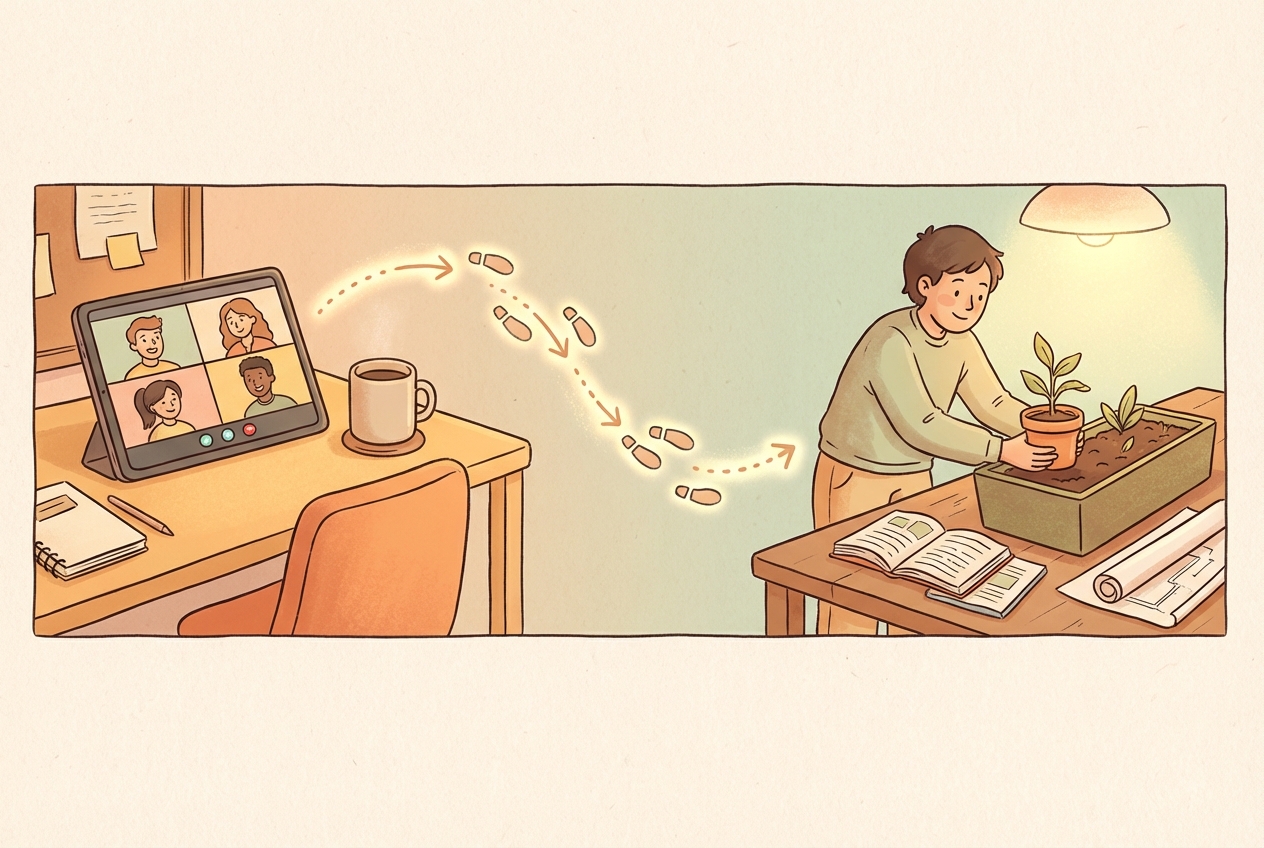
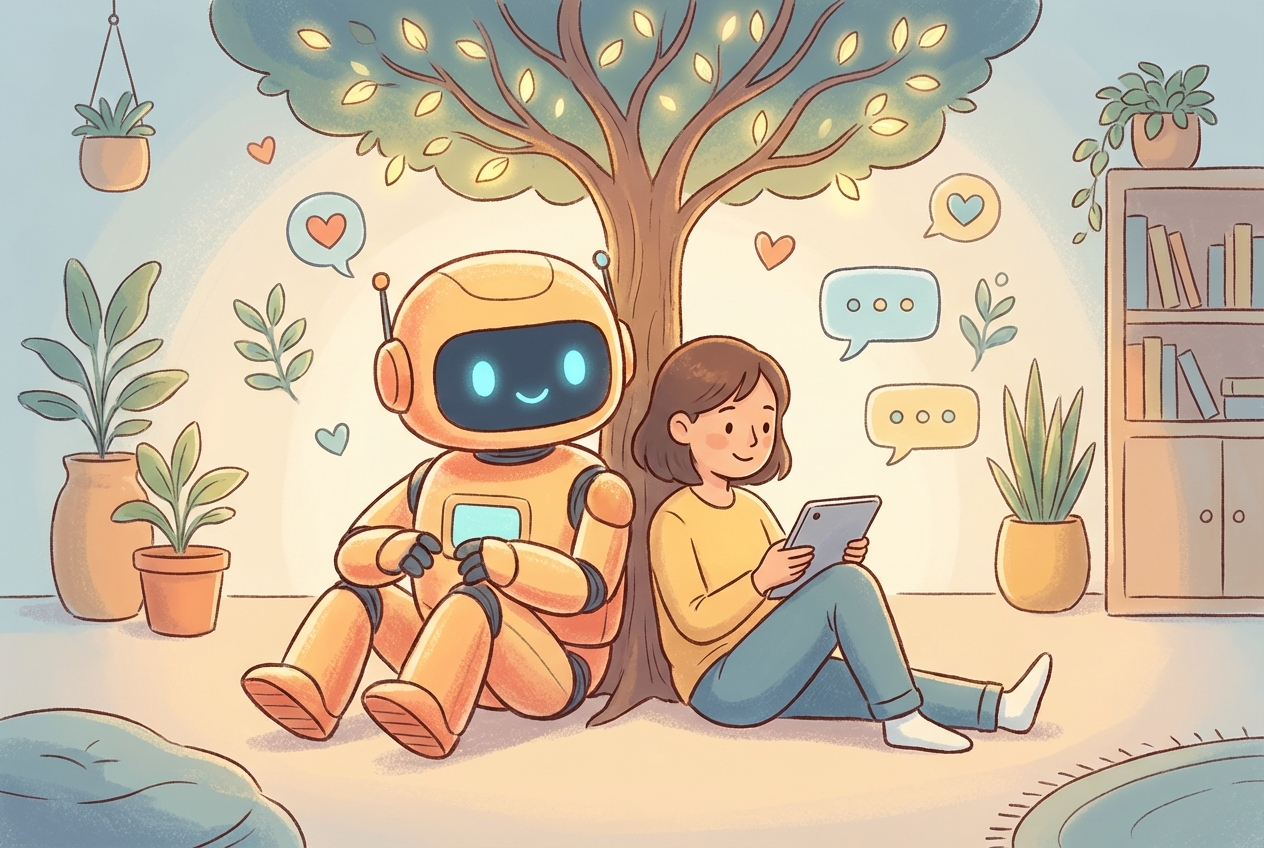
A college student texts a chatbot at 2 a.m., unable to sleep because of racing thoughts. A single mother checks in with her wellness app during her lunch break, the only quiet moment she'll have all day. A veteran uses voice prompts to work through anxiety before a job interview. None of them are in a therapist's office, yet each is receiving meaningful emotional support.
Mental health care is undergoing a quiet transformation. Beyond therapy in its traditional form, digital companions are revolutionizing mental wellness by meeting people exactly where they are: on their phones, in their homes, during the moments when professional help isn't available. These AI-powered tools aren't replacing therapists. They're filling gaps that have existed for decades, offering support to millions who might otherwise go without.
The numbers tell a stark story. Roughly one in five adults experiences mental illness each year, yet fewer than half receive treatment. Wait times for therapists stretch into months. Costs remain prohibitive for many. Digital companions have emerged as a bridge, providing immediate, affordable, and surprisingly effective support.
Early mental health chatbots followed rigid scripts. Users typed keywords, and the system spit back pre-written responses. The experience felt mechanical, often frustrating. You couldn't have a real conversation because the technology simply couldn't understand context or nuance.
Generative AI changed everything. Modern digital companions understand natural language, remember previous conversations, and adapt their responses to your specific situation. They recognize when you're venting versus when you're seeking advice. They pick up on emotional cues in your word choices.
Early chatbots relied on decision trees and keyword matching
Current systems use large language models trained on therapeutic frameworks
Response quality has improved dramatically in just three years
Personalization now happens in real-time during conversations
The therapy shortage is real and worsening. Rural areas often have zero mental health providers within reasonable driving distance. Urban centers fare better but face overwhelming demand. Insurance complications add another barrier.
Digital companions don't solve this crisis entirely, but they provide something valuable: immediate access. Someone experiencing anxiety at midnight doesn't need to wait for office hours. A person curious about therapy can explore concepts without commitment. These tools serve as entry points, helping users understand their needs before seeking professional care.
Mental health struggles don't follow business hours. Panic attacks happen at dinner parties. Depressive episodes hit hardest on Sunday evenings. The constant availability of digital companions addresses a fundamental limitation of traditional care.
Crisis intervention features have become increasingly sophisticated. Many apps can detect language patterns suggesting self-harm and immediately provide hotline numbers, safety planning tools, and grounding exercises. They're not replacing emergency services but serving as a first response layer.
Instant access eliminates waiting room anxiety
Users can engage during acute moments of distress
Multiple check-ins per day become feasible and free
Time zone differences become irrelevant
CBT remains the gold standard for treating anxiety and depression. Digital companions have translated these techniques into interactive experiences. You might identify cognitive distortions through guided prompts, challenge negative thought patterns with structured exercises, or track your progress over weeks.
The personalization matters. A college student and a retiree face different stressors. An effective digital companion learns your specific triggers, preferred coping strategies, and communication style. It remembers that deep breathing works for you but progressive muscle relaxation doesn't.
Shame keeps people silent. The fear of being judged, even by trained professionals, prevents honest disclosure. Digital companions offer something unique: a space where embarrassment doesn't exist.
Users report saying things to AI companions they've never told another person. The absence of human judgment removes a significant psychological barrier. This openness often becomes therapeutic itself, allowing people to process experiences they've suppressed for years.
Many people won't walk into a therapist's office, but they'll download an app. The privacy of digital interaction removes social risk. Nobody knows you're using a mental health tool unless you choose to share that information.
This matters particularly for:
Men, who statistically underutilize mental health services
Teenagers concerned about peer perception
Professionals worried about career implications
People in communities where therapy carries cultural stigma
Digital companions often serve as gateway experiences. Users become comfortable with therapeutic concepts and language, making eventual human therapy feel less intimidating.
Traditional therapy costs between $100 and $300 per session in the United States. Many digital companions offer core features for free or charge monthly subscriptions under $20. The economics aren't even comparable.
Scalability extends beyond cost. A single therapist sees perhaps 30 clients weekly. A well-designed digital companion can support millions simultaneously. For developing nations with severe mental health provider shortages, this scalability represents genuine opportunity.
Your digital companion notices patterns you might miss. Perhaps your mood consistently dips on Wednesdays. Maybe your anxiety spikes after certain conversation topics. Sentiment analysis turns your interactions into actionable data.
These insights help users understand their mental health objectively. Instead of vague feelings that something is wrong, you see concrete trends. This data can also inform conversations with human providers, giving therapists a richer picture of your daily experience.
Weekly and monthly mood summaries reveal patterns
Trigger identification becomes data-driven
Progress visualization motivates continued engagement
Regression alerts prompt early intervention
Sleep quality affects mood. Exercise impacts anxiety. Heart rate variability correlates with stress levels. Modern digital companions increasingly pull data from fitness trackers and smartwatches, creating comprehensive wellness profiles.
This integration enables proactive support. Your companion might notice poor sleep patterns and suggest relaxation techniques before you even report feeling tired. The combination of self-reported emotional data and physiological measurements creates a fuller picture than either source alone.
Mental health data is among the most sensitive information a person can share. Users disclose trauma, relationship problems, substance use, and suicidal thoughts. The stakes for data protection couldn't be higher.
Responsible digital companion developers implement end-to-end encryption, anonymous usage options, and clear data retention policies. Users should verify these protections before engaging. Questions to ask include where data is stored, who can access it, and whether conversations are used to train AI models.
AI companions work best as part of a broader care ecosystem, not as standalone solutions. Human oversight remains essential for several reasons:
AI cannot diagnose mental health conditions
Complex cases require professional clinical judgment
Crisis situations may need emergency intervention
Medication management falls outside AI capabilities
The most effective models combine AI accessibility with human expertise. Digital companions handle daily support and skill-building while flagging serious concerns for professional review.
Mental healthcare is moving toward integration rather than replacement. Picture a system where your digital companion provides daily support, tracks your progress, and shares relevant insights with your human therapist before each session. Your therapist focuses on deeper work, informed by data that would take months to gather through traditional methods alone.
This hybrid approach maximizes both technologies. AI handles scale, availability, and data collection. Humans provide nuanced judgment, genuine connection, and clinical expertise. Neither works as well in isolation as they do together.
The transformation of mental wellness through digital companions is already underway. These tools are revolutionizing how we access support, reducing barriers that have kept millions from care. They're not perfect, and they're not replacements for human connection. But for the college student at 2 a.m., the overwhelmed parent at lunch, and the anxious veteran before his interview, they're providing something invaluable: help exactly when it's needed.
Your mental health matters. Whether you start with a digital companion, a human therapist, or both, taking that first step toward support is what counts. The tools exist. The barriers are lower than ever. The question is simply whether you're ready to use them.