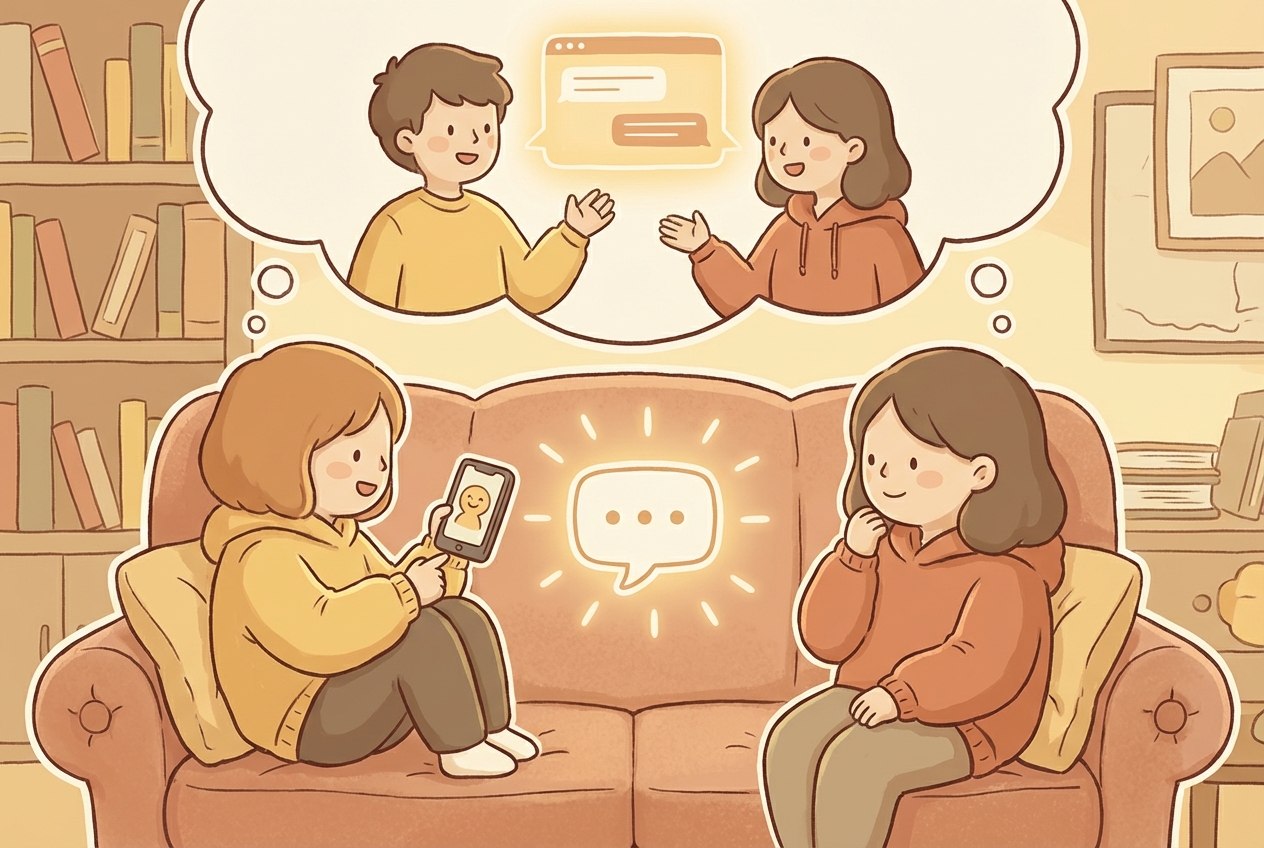
A teenager in rural Montana types her darkest thoughts into a chat window at 2 AM. Thousands of miles away, a stranger responds with understanding. No judgment. No insurance forms. No waiting list. This exchange represents a growing phenomenon reshaping how millions seek emotional support.
The question of whether anonymous chat serves as the new therapy has sparked intense debate among mental health professionals, technologists, and users alike. Digital companions, whether human strangers or AI-powered chatbots, offer something traditional therapy often can't: instant, barrier-free connection. You don't need to schedule an appointment six weeks out. You don't need to explain your situation to a receptionist. You simply open an app and start talking.
This shift isn't replacing professional mental health care. Rather, it's filling gaps that have existed for decades. Exploring the benefits of digital companions reveals a complex picture of modern emotional support. These platforms serve different needs than a therapist's office, and understanding that distinction matters for anyone considering their options.
The therapist's couch has held symbolic power for over a century. Sigmund Freud's patients reclined while speaking their minds. That image persists, but reality looks different now. Over 60% of American counties lack a single psychiatrist. Wait times for mental health appointments average 48 days nationally.
Anonymous chat platforms emerged to fill this void. Apps like 7 Cups, Wysa, and various peer support communities now serve millions of users monthly. These platforms offer:
Immediate access without appointment scheduling
Text-based communication that feels familiar to digital natives
Options ranging from AI chatbots to trained volunteer listeners
Significantly lower costs than traditional therapy sessions
The shift reflects broader changes in how you communicate. Texting feels natural. Phone calls feel intrusive to many younger users. Chat windows provide a comfortable middle ground between isolation and face-to-face vulnerability.
Psychologist John Suler identified something powerful happening online. He called it the "online disinhibition effect." When you're anonymous, you share more freely. The usual social barriers dissolve.
This effect works through several mechanisms. You can't see the other person's facial reactions. They can't judge your appearance, your nervous habits, or your tears. The screen creates psychological distance that paradoxically enables closeness.
Research from the Journal of Medical Internet Research found that users disclosed more sensitive information in anonymous online settings than in face-to-face interactions. This openness can accelerate emotional processing. Secrets you've carried for years might spill out within minutes of an anonymous conversation.
Traditional therapy costs between $100 and $250 per session without insurance. Many insurance plans limit mental health coverage or require high deductibles. For someone earning minimum wage, weekly therapy isn't financially realistic.
Anonymous chat platforms operate differently:
Many peer support apps offer free basic services
AI-powered companions typically charge $10-20 monthly
No transportation costs or time off work required
Rural users gain access previously unavailable to them
Geographic barriers matter enormously. If you live 90 miles from the nearest therapist, weekly sessions become impossible. Your phone, however, travels everywhere with you.
Mental health stigma persists despite decades of awareness campaigns. A 2022 survey found that 47% of respondents worried about being judged for seeking therapy. In certain communities, religious groups, and professions, that percentage climbs higher.
Anonymous chat eliminates this concern entirely. Nobody knows you're seeking support. Your employer won't find out. Your family won't discover appointment reminders. You control the information completely.
This anonymity proves particularly valuable for people exploring sensitive topics: sexuality, trauma, family conflicts, or thoughts they've never voiced aloud. The protection of anonymity creates space for honest self-examination.
Mental health crises don't follow business hours. Panic attacks strike at midnight. Suicidal thoughts intensify on holidays when therapist offices close. Traditional care systems struggle with this reality.
Anonymous platforms operate around the clock. Someone is always available, whether a volunteer listener, a trained crisis counselor, or an AI companion. This availability has genuine life-saving potential. Crisis Text Line reports that 94% of texters feel less suicidal after a conversation.
The immediacy matters psychologically too. When you're struggling, waiting days for an appointment feels unbearable. Getting support within minutes can prevent spiraling.
Therapists bring clinical training and evidence-based techniques. Peer supporters bring something different: personal understanding. When someone says "I've been there," that statement carries unique weight.
Peer support communities thrive on this dynamic. A recovering addict understands cravings in ways a textbook can't convey. A survivor of abuse recognizes patterns that might take a therapist months to identify. These connections create:
Immediate rapport based on shared experience
Practical coping strategies that worked for real people
Reduced feelings of isolation and abnormality
Hope demonstrated through others' recovery
Research supports peer support's effectiveness for specific conditions. Studies show peer support improves outcomes for depression, anxiety, and substance use disorders when combined with professional treatment.
Peer supporters and AI companions can't replace professional care for serious mental illness. Bipolar disorder requires medication management. PTSD often needs specialized trauma therapy. Schizophrenia demands clinical intervention.
Anonymous chat platforms carry inherent limitations:
Untrained peers may give harmful advice
AI companions can miss serious warning signs
Complex conditions require diagnostic expertise
Medication questions need medical professionals
The healthiest approach treats these tools as complements, not replacements. Anonymous chat can provide daily support between monthly therapy sessions. It can help you process thoughts before bringing them to a professional. It shouldn't serve as your only resource for serious conditions.
Your mental health disclosures deserve protection. Reputable platforms recognize this responsibility. They implement technical safeguards including end-to-end encryption, anonymous user IDs, and strict data retention policies.
Before using any platform, investigate their practices. Check whether they sell user data to third parties. Review their encryption standards. Understand how long they retain conversation logs.
Quality platforms typically offer:
End-to-end encryption for all conversations
Options to delete conversation history
Clear privacy policies written in plain language
Compliance with HIPAA or similar standards
The stakes are high. Your most vulnerable disclosures could theoretically be exposed through data breaches or corporate misuse. Choose platforms that treat your privacy as seriously as you do.
Not all anonymous spaces promote healing. Some forums encourage harmful behaviors. Pro-eating disorder communities, suicide method sharing, and self-harm glorification exist alongside supportive spaces.
Protect yourself by recognizing warning signs. Healthy communities encourage professional help. They don't romanticize mental illness or compete over severity. Moderators actively remove harmful content.
If a space makes you feel worse consistently, leave. The anonymity that protects you also protects bad actors. Trust your instincts about whether a community serves your wellbeing.
The most promising developments combine digital accessibility with clinical expertise. Hybrid models are emerging where anonymous chat serves as the first point of contact, with clear pathways to professional care when needed.
AI companions are growing more sophisticated. They can recognize crisis language and connect users with human support. They can track mood patterns over time and suggest when professional intervention might help. They're not replacing therapists but extending their reach.
Insurance companies are beginning to cover digital mental health tools. Employers are including them in benefits packages. These trends suggest anonymous support will become increasingly integrated with traditional care rather than existing as a separate system.
Your mental health toolkit can include multiple resources. A therapist for deep work. A peer support community for daily connection. An AI companion for 3 AM anxiety. These tools work together rather than competing.
The question isn't whether anonymous chat replaces therapy. It's how these different supports can combine to give you what you need, when you need it. Start by identifying your specific needs. Then build a support system that matches them, using both digital and traditional resources. Your mental health deserves that comprehensive approach.