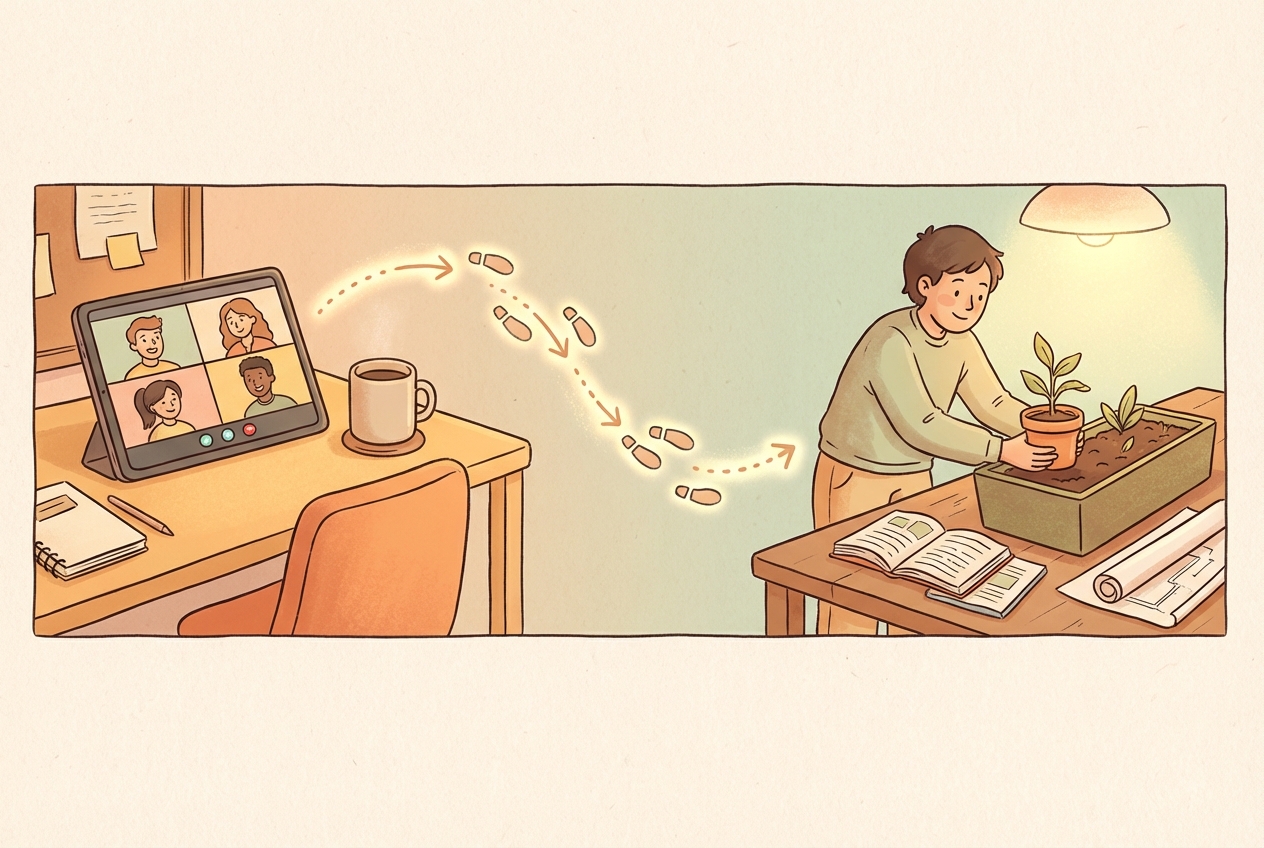

The blank page has served as a mirror for human thought for centuries. Diary entries, dream logs, gratitude lists. All methods of externalizing internal experience. The practice of written self-reflection remains a cornerstone of mental wellness and personal growth.
A new contender has emerged. Artificial intelligence now offers conversational interfaces designed for emotional processing. These tools respond, question, and reframe. The debate around journaling vs AI chat reflects a broader question about how humans process emotion and develop self-awareness.
Both methods serve the same fundamental purpose: creating space for reflection. Yet their mechanisms differ substantially. One operates in silence. The other provides immediate interaction. One demands self-direction. The other offers structured guidance.
The choice between these approaches is not binary. Understanding the distinct advantages and limitations of each method allows for informed decision-making. Personal goals, psychological needs, and practical constraints all factor into this equation.
Traditional journaling: centuries of documented psychological benefits
AI chat tools: emerging technology with growing research support
Hybrid approaches: combining both methods for comprehensive reflection
Neither method holds universal superiority. The optimal choice depends entirely on individual circumstances and objectives.
Pen and paper journaling represents the original self-help technology. No batteries required. No subscription fees. No data collection policies. The simplicity of this method carries significant psychological weight.
The act of handwriting engages neural pathways differently than typing. Motor cortex activation during handwriting creates stronger memory encoding. This physiological difference translates to deeper emotional processing for many practitioners.
Handwriting operates at approximately 13 words per minute. Typing averages 40 words per minute. This forced deceleration creates cognitive space that rapid digital communication eliminates.
The slower pace allows for:
Deeper consideration of word choice and meaning
Natural pauses for emotional processing
Reduced impulsivity in expression
Enhanced connection between thought and physical action
Research from Princeton University demonstrates that handwritten notes produce better conceptual understanding than typed notes. This finding extends to emotional content. Slower processing often means deeper processing.
A physical journal exists in one location. No cloud storage. No server vulnerabilities. No terms of service agreements. This containment provides psychological freedom that digital alternatives cannot fully replicate.
The absence of any audience, real or imagined, removes performance anxiety from the writing process. Thoughts flow without self-censorship. Embarrassing admissions stay truly private. This safety enables exploration of difficult emotions without fear of judgment or exposure.
Conversational AI tools designed for emotional support represent a fundamentally different approach. These systems provide something a journal cannot: response. The dynamic nature of dialogue creates opportunities unavailable in solitary writing.
AI chat interfaces employ natural language processing to understand emotional content and provide relevant feedback. The technology continues advancing rapidly. Current systems offer sophisticated emotional recognition and evidence-based response patterns.
Writer's block affects journaling practitioners regularly. The empty page can feel intimidating. Where to begin? What matters? These questions sometimes prevent reflection entirely.
AI chat tools eliminate this barrier through structured prompting. The system initiates conversation. Questions guide exploration. Users respond rather than generate from nothing. This scaffolding proves particularly valuable for:
Individuals new to reflective practice
Those experiencing emotional overwhelm
People who struggle with self-directed introspection
Users seeking specific therapeutic frameworks
The guided approach reduces cognitive load. Energy shifts from generating structure to exploring content.
Human thought patterns contain predictable distortions. Catastrophizing. Black-and-white thinking. Mind reading. These cognitive biases operate automatically and often invisibly.
AI systems trained on cognitive behavioral therapy principles can identify and challenge these patterns. The external perspective, even from an artificial source, offers something self-reflection alone cannot provide. A journal never questions assumptions. It never suggests alternative interpretations.
This reframing function represents a core advantage of AI chat over traditional journaling. The interactive element introduces cognitive disruption that pure self-reflection may miss.
The comparison between journaling vs AI chat extends beyond mere preference. Measurable differences exist in how each method affects emotional processing and long-term psychological outcomes.
Journaling cultivates internal authority. The writer develops their own insights without external input. This process builds self-trust and independent emotional regulation capacity.
AI chat provides external validation and alternative perspectives. Users receive feedback that confirms, challenges, or expands their thinking. This external element offers support but may reduce development of independent insight generation.
Key distinctions include:
Journaling: builds self-reliance and internal validation skills
AI chat: provides immediate support and cognitive restructuring
Journaling: requires higher initial effort with compounding returns
AI chat: offers lower barriers with potentially plateauing benefits
Neither approach is inherently superior. The appropriate choice depends on current needs and long-term development goals.
Physical journals carry no data breach risk. They cannot be hacked. They require no privacy policy review. The information exists only in physical form, controlled entirely by the owner.
AI chat tools operate differently. Conversations transmit through servers. Data storage policies vary by provider. Even with strong encryption and privacy commitments, digital information carries inherent vulnerability.
Considerations for AI chat users:
Review data retention policies before use
Understand whether conversations train AI models
Consider what information feels appropriate to share digitally
Evaluate provider reputation and security practices
For highly sensitive content, traditional journaling offers unmatched privacy protection.
Personal circumstances determine optimal approach. No universal recommendation applies to all individuals. Self-assessment of goals, constraints, and preferences guides effective decision-making.
Certain situations and personality types align better with traditional journaling. The method excels for specific applications and user profiles.
Traditional journaling suits those who:
Value complete privacy without exception
Prefer self-directed exploration
Enjoy the tactile experience of handwriting
Seek to develop independent emotional regulation
Have established reflection habits
Process best through slow, deliberate expression
The method also proves superior for dream journaling, long-form narrative processing, and creative expression that benefits from physical medium.
AI chat tools offer advantages for specific circumstances and user needs. The interactive element addresses limitations inherent in solitary practice.
AI chat suits those who:
Feel stuck in repetitive thought patterns
Need external structure for reflection
Benefit from immediate feedback and validation
Struggle with blank page paralysis
Seek specific cognitive behavioral interventions
Prefer conversational processing over written expression
The technology proves particularly valuable during acute distress when self-directed reflection feels impossible.
The most effective approach for many individuals combines both methods. Strategic integration leverages the unique advantages of each while compensating for their respective limitations.
A practical hybrid model might include morning journaling for gratitude and intention-setting. AI chat could serve for processing specific challenges or stuck points. Evening journaling could capture insights from AI interactions in permanent, private form.
This integration allows for:
Deep personal processing through traditional writing
Cognitive restructuring through AI interaction
Privacy protection for sensitive content
Guided exploration for complex challenges
Development of both internal authority and external perspective-taking
The hybrid approach treats these methods as complementary tools rather than competing alternatives. Each serves distinct functions within a comprehensive reflection practice.
Experimentation reveals individual optimal combinations. Some users prefer 80% journaling with occasional AI support. Others reverse this ratio. The correct balance emerges through deliberate trial and adjustment.
The question of journaling vs AI chat ultimately resolves into a question of personal fit and situational appropriateness. Both methods offer genuine value. Both carry limitations. Informed practitioners select tools based on specific needs rather than categorical preference. The goal remains constant: deeper self-understanding and improved emotional wellbeing. The path to that goal varies by individual.