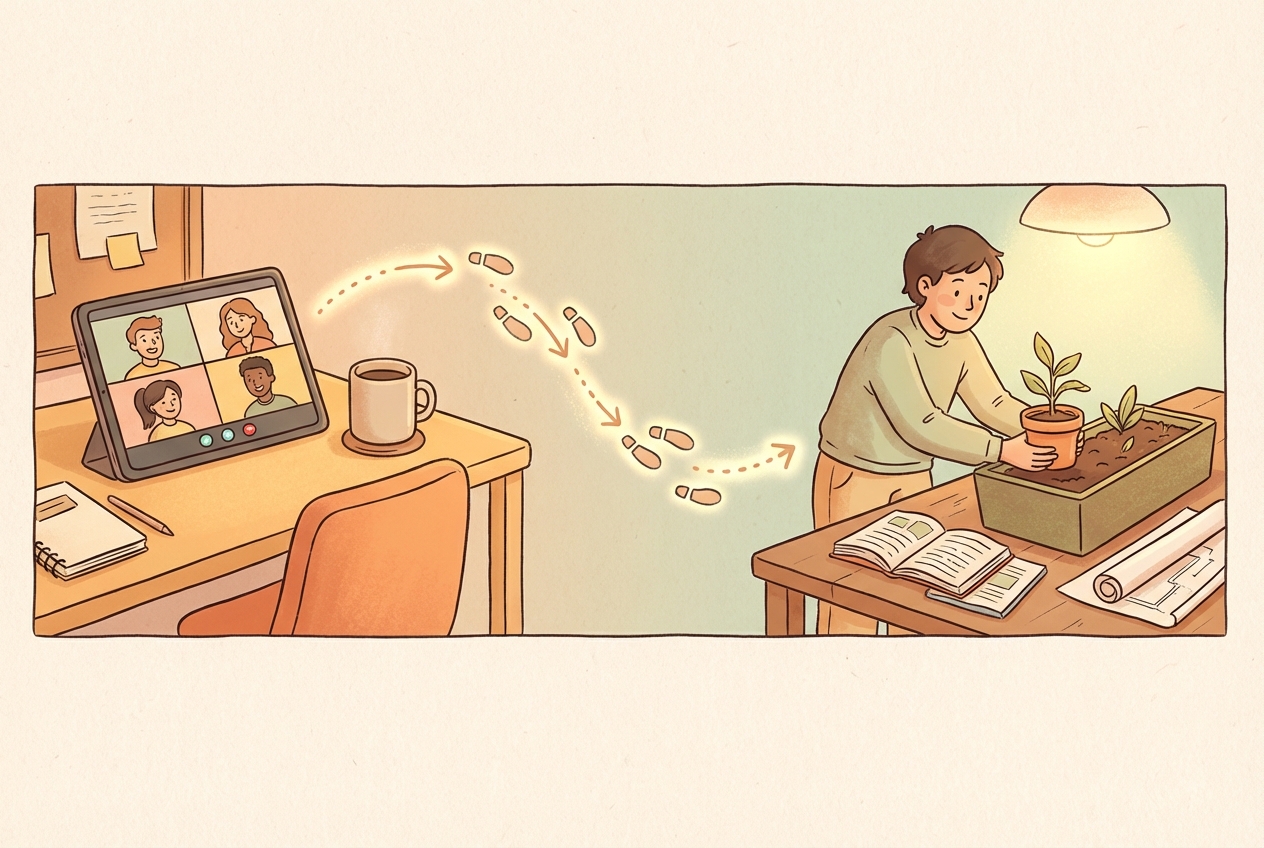

Emotional chaos doesn't announce itself with a warning label. One day you're managing fine, and the next you're sitting in your car after work, unable to pinpoint why everything feels so heavy. Traditional journaling promises clarity, but those blank pages often become graveyards of half-finished entries and guilt about inconsistency. The path from chaos to calm requires more than good intentions: it demands a system that works with your brain, not against it.
Cohera Session Notes offers something different. Rather than asking you to pour your unfiltered thoughts onto a page and hope patterns emerge, it provides structure for mapping your emotional journey in ways that actually reveal useful insights. Think of it as the difference between throwing darts blindfolded and using a GPS. Both involve movement, but only one gets you somewhere intentionally.
This approach to emotional tracking has helped thousands of people identify what triggers their anxiety, understand their mood patterns, and build genuine self-awareness without the overwhelm that derails most wellness practices.
Free-form journaling works beautifully for some people. For the rest of us, staring at a blank page triggers performance anxiety that defeats the entire purpose. The problem isn't lack of effort: it's that unstructured reflection requires skills most of us were never taught.
Traditional journaling also creates a documentation problem. You might write three pages about a terrible Tuesday, but six months later, finding the useful information buried in that emotional dump becomes nearly impossible. Cohera addresses this by building searchability and categorization into the process from the start.
Structured prompts guide reflection without dictating content
Searchable tags make historical patterns accessible
Consistent format enables meaningful comparison across time
Reduced friction means higher completion rates
Structure isn't a limitation: it's a scaffold. Cohera's session notes framework asks specific questions that draw out information you'd otherwise skip. When you're upset, you rarely think to note the time of day, what you ate, or how much sleep you got. But those details often matter more than the story you tell yourself about why you're struggling.
The structured approach also combats a common journaling trap: rumination disguised as reflection. Writing the same anxious thoughts repeatedly doesn't create insight. Cohera's format pushes you toward observation rather than spiral, helping you document what happened without drowning in interpretation.
Most emotion tracking apps offer a handful of preset feelings: happy, sad, angry, anxious. Real emotional experience is far more nuanced. Cohera's tagging system lets you create custom emotional labels that match your actual vocabulary.
Maybe you experience a specific flavor of dread on Sunday evenings that doesn't quite fit "anxious." Perhaps you've noticed a particular kind of restless energy that precedes your most productive days. Custom tags capture these subtleties, making your emotional map genuinely yours.
Create unlimited custom emotion tags
Track intensity levels alongside emotional labels
Build a personal emotional vocabulary over time
Identify emotions that cluster together
The system learns your patterns. After a few weeks, you'll start noticing that certain tags appear together, revealing emotional combinations you hadn't consciously recognized.
Emotions don't happen in a vacuum. Cohera's trigger-linking feature lets you connect your emotional states to external circumstances: sleep quality, social interactions, work events, physical symptoms, even weather. This isn't about finding someone to blame. It's about understanding the full picture.
One user discovered her monthly anxiety spikes correlated almost perfectly with her menstrual cycle, something she'd never connected despite years of therapy. Another found that his depression episodes consistently followed periods of social isolation lasting more than three days. These insights emerged not from introspection alone, but from data.
The trigger-linking system supports both automatic tracking (syncing with health apps) and manual entry, giving you flexibility in how much detail you want to capture.
Raw data becomes useful only when you can see it. Cohera transforms your session notes into visual maps showing emotional patterns across days, weeks, and months. These visualizations reveal rhythms invisible to daily experience.
Seasonal patterns often surprise people. Many users discover their emotional baseline shifts predictably with daylight hours, independent of life circumstances. Others find weekly patterns: specific days that consistently trend better or worse. This information enables proactive planning rather than reactive coping.
Weekly mood trend graphs show day-to-day variation
Monthly overviews reveal longer cycles
Tag frequency charts highlight dominant emotional themes
Trigger correlation displays connect circumstances to feelings
Pattern recognition also helps you notice improvement. When you're in the middle of difficult emotions, progress feels invisible. Visual tracking provides evidence that things have changed, even when your current feelings insist otherwise.
Six months of emotional data tells stories that individual entries cannot. Longitudinal tracking through Cohera reveals how your emotional landscape shifts over time, which interventions actually helped, and what challenges tend to recur.
This long-view perspective proves especially valuable for people working with therapists. Instead of relying on memory to describe how you've been doing, you can share concrete data. Your therapist sees patterns you might minimize or forget. Sessions become more focused because you're working from shared information rather than reconstructed narratives.
The longitudinal data also helps you distinguish between temporary setbacks and genuine regression. A bad week looks different when you can see it's an outlier rather than a return to baseline.
The hour after therapy is golden for documentation. Your insights are fresh, your defenses are lowered, and you remember what actually happened in the session. Cohera's post-session template captures this window effectively.
Document specific realizations rather than general summaries. "We talked about my relationship with my mother" tells you nothing useful later. "I realized I interpret her silence as criticism because of the incident when I was twelve" gives you something to work with.
Record one specific insight per session
Note any homework or experiments to try
Tag emotions that came up during the session
Capture questions that emerged for next time
Rate your sense of progress honestly
Resist the urge to make your notes sound profound. The most useful documentation is often mundane: "Noticed I held my breath when discussing work" or "Felt defensive when she asked about sleep."
Daily journaling sounds ideal. In practice, it creates another obligation that eventually joins the pile of abandoned self-improvement projects. Cohera's approach prioritizes sustainability over frequency.
Start with three entries per week, scheduled at times that already have natural pause points. After a workout, before bed on Sundays, during your lunch break on Wednesdays: whatever fits your existing routine. Consistency matters more than volume.
The app's streak-free design intentionally avoids gamification that creates guilt. Missing an entry doesn't break anything. You simply pick up where you left off, without the shame spiral that derails so many tracking habits.
Quality also beats quantity. A thoughtful five-minute entry provides more value than a rushed fifteen-minute session completed out of obligation. Give yourself permission to write less when that's what you have capacity for.
Building emotional awareness isn't a project with an end date. Cohera works best as a permanent fixture in your wellness toolkit, adapting as your needs change. During stable periods, weekly check-ins might suffice. During transitions or crises, daily documentation helps you stay grounded.
The platform grows with you. Early entries might focus on basic mood tracking. Over time, you'll develop more sophisticated ways of understanding your emotional patterns, and Cohera's flexibility supports that evolution.
Start simple and add complexity gradually
Review your visualizations monthly to spot trends
Share relevant data with therapists or coaches
Adjust your tracking frequency based on current needs
Celebrate pattern recognition as genuine progress
Mapping your emotional journey from chaos to calm isn't about eliminating difficult feelings. It's about understanding them well enough to respond skillfully. Cohera session notes provide the structure that makes this understanding possible, turning scattered emotional experiences into coherent self-knowledge.
Your emotions contain information. Cohera helps you read it.