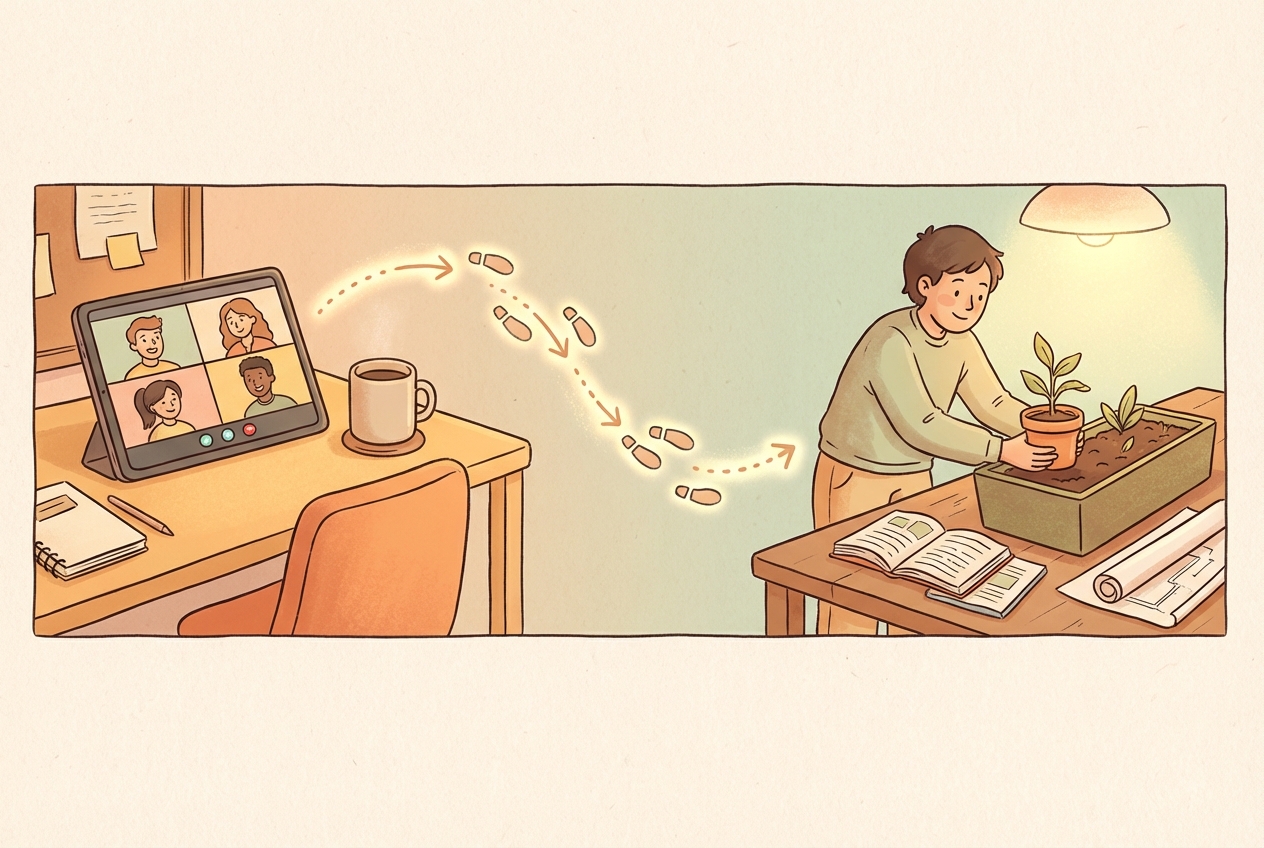

Mental health care faces a paradox. Resources exist, yet access remains blocked by months-long waiting lists. The gap between crisis and care has widened to dangerous proportions. Traditional systems buckle under demand. Patients deteriorate while awaiting their first appointment. This reality defines the mental health landscape of 2026. The need for immediate emotional support has never been more acute. Cohera emerges as a response to this systemic failure. The platform offers something previously unavailable: instant access to structured emotional support without the crushing delays of conventional pathways. Moving beyond waiting lists represents more than convenience. It represents a fundamental shift in how care reaches those who need it. Getting immediate emotional support through Cohera in 2026 addresses a crisis that traditional healthcare has failed to solve. The technology does not replace clinical treatment. It fills the void between recognition of need and receipt of professional care.
The numbers paint a grim picture. Average wait times for mental health services in developed nations now exceed 12 weeks. Some regions report delays of six months or longer. The United Kingdom's NHS mental health waiting list surpassed 1.9 million people in early 2026. Canada reports similar strain, with provincial systems averaging 16-week delays for non-emergency psychiatric consultations.
United States: 42% of counties lack a single practicing psychiatrist
Australia: Rural areas face wait times exceeding 20 weeks
European Union: Cross-border disparities create a patchwork of access
Global shortage: Estimated deficit of 4.3 million mental health workers worldwide
Private care offers faster access but excludes those without financial means. Insurance coverage remains inconsistent. The system creates a two-tier reality where wealth determines speed of treatment.
Waiting corrodes mental health. Studies document a phenomenon called "waitlist deterioration." Patients who initially presented with moderate symptoms often worsen significantly during extended delays. Anxiety compounds. Depression deepens. The knowledge that help exists but remains inaccessible creates its own psychological burden.
Crisis situations escalate during these gaps. Emergency room visits for mental health concerns have increased 31% since 2023. Self-harm incidents among those on waiting lists occur at rates three times higher than the general population. The waiting period itself becomes a risk factor.
Cohera operates on a hybrid architecture. Natural language processing forms the foundation. The system analyzes communication patterns, emotional indicators, and contextual cues in real time. Machine learning models trained on millions of therapeutic interactions guide response generation.
Key technical components include:
Sentiment analysis engines processing text and voice inputs
Adaptive dialogue systems that adjust to individual communication styles
Risk assessment algorithms flagging urgent concerns for human escalation
Memory systems maintaining continuity across user sessions
The platform does not simulate a therapist. It provides structured support frameworks based on evidence-based approaches. Cognitive behavioral techniques, mindfulness protocols, and crisis de-escalation methods translate into interactive modules.
Cohera occupies a specific space in the care continuum. It serves as an active bridge rather than a passive waiting room. Users engage with the platform while awaiting professional appointments. The system prepares them for clinical work ahead.
Documentation features allow users to track symptoms, triggers, and patterns. This information transfers to eventual care providers with user consent. Clinicians receive patients who arrive with organized histories rather than fragmented recollections. The waiting period becomes productive rather than purely harmful.
Escalation protocols connect users to emergency services when risk indicators exceed defined thresholds. The system recognizes its limitations. Severe crisis situations route immediately to human intervention.
Mental health crises do not observe business hours. Traditional services operate within scheduling constraints. Cohera removes temporal barriers entirely. Support remains accessible at 3 AM on a holiday weekend. The platform responds within seconds regardless of demand volume.
Geographic limitations dissolve as well. Rural users access the same support as urban populations. Language localization extends reach across borders. Current deployment covers 47 languages with regional dialect recognition.
No appointment scheduling required
Consistent response times regardless of user location
Scalable capacity meeting demand spikes without degradation
Offline modes for areas with limited connectivity
Generic advice fails most users. Cohera builds individualized support profiles over time. The system learns communication preferences, effective intervention types, and personal triggers. Each interaction refines the model.
Personalization extends beyond content to delivery method. Some users respond better to structured exercises. Others benefit from reflective questioning. The platform adapts its approach based on observed engagement patterns. Cultural considerations inform response framing. Age-appropriate language adjusts automatically.
Privacy architecture ensures personalization data remains encrypted and user-controlled. Deletion requests execute immediately and completely.
Cohera functions best as a complement to existing systems rather than a replacement. Partnership agreements with national health services in 12 countries formalize this integration. Referral pathways flow bidirectionally. Healthcare providers recommend Cohera for interim support. Cohera facilitates transitions to clinical care when appropriate.
Insurance recognition has expanded significantly. Major carriers in North America and Europe now cover Cohera access as a preventive benefit. Employer wellness programs incorporate the platform at increasing rates. University counseling centers use it to manage overflow demand.
NHS pilot programs in three UK regions show 23% reduction in crisis presentations
Canadian provincial health authorities testing integration protocols
Private practice networks using Cohera for between-session support
Hospital discharge planning incorporating platform access
Mental health data requires exceptional protection. Cohera implements end-to-end encryption for all communications. Data residency options allow users to specify geographic storage locations. GDPR, HIPAA, and equivalent frameworks govern operations in respective jurisdictions.
Ethical oversight extends beyond legal compliance. An independent advisory board reviews algorithmic decisions quarterly. Bias audits examine response patterns across demographic groups. Transparency reports publish aggregate statistics on system performance and escalation rates.
The platform explicitly disclaims diagnostic capability. Users receive clear information about what Cohera can and cannot provide. Informed consent processes ensure understanding before engagement begins.
Aggregate data reveals meaningful impact. Users engaging with Cohera while on clinical waiting lists report 34% lower symptom escalation compared to control groups receiving no interim support. Completion rates for eventual therapy increase among platform users. The preparation effect appears significant.
Individual accounts, anonymized and aggregated, show common patterns. Users describe feeling less alone during waiting periods. The ability to process experiences in structured ways provides relief even without clinical diagnosis or treatment. Some discover coping strategies that remain useful throughout subsequent professional care.
Development roadmaps indicate expansion into specialized support modules:
Perinatal mental health protocols launching Q3 2026
Adolescent-specific interfaces in testing
Caregiver support features addressing secondary trauma
Integration with wearable devices for physiological monitoring
Research partnerships with academic institutions continue validating outcomes. Peer-reviewed publications document both successes and limitations. The evidence base grows with each deployment cycle.
The mental health care crisis will not resolve through traditional expansion alone. Training sufficient clinicians takes decades. Building facilities requires years. Immediate solutions demand different approaches. Cohera represents one such approach, tested and refined through real-world deployment.
The platform does not promise to cure mental illness. It promises presence during absence. It offers structure during chaos. It provides connection during isolation. These contributions matter profoundly to those experiencing them.
Healthcare systems face a choice. They can continue managing waiting lists as administrative problems. Or they can integrate tools that transform waiting periods into preparation periods. The technology exists. The evidence supports its use. The need remains undeniable.
Those seeking support beyond traditional waiting lists can explore Cohera's immediate access model. The gap between crisis and care need not remain empty. Filling that gap may prove one of the most significant mental health advances of this decade.