Your phone buzzes. You glance at the notification, then another, then another. Before you know it, fifteen minutes have vanished into a scroll hole. Your shoulders are tense, your mind scattered, and that task you meant to finish sits untouched. This cycle repeats dozens of times daily for most people. The power of a 5-minute digital detox for your mental health lies in its simplicity. You don't need a week-long retreat or a dramatic social media purge. Five minutes of intentional disconnection can reset your nervous system, sharpen your focus, and restore a sense of calm. The catch? Most people dismiss such a brief break as meaningless. They're wrong. Research shows that even micro-breaks from screens create measurable changes in stress hormones and cognitive function. Your brain craves these pauses, even when your habits resist them.
Every notification triggers a small stress response in your body. That vibration in your pocket signals potential social rejection, work demands, or breaking news. Your brain can't distinguish between a text from your mom and a predator rustling in the bushes. It responds to both with the same ancient alarm system.
The average person checks their phone 96 times per day. That's 96 micro-stressors, 96 attention shifts, 96 opportunities for your nervous system to spike into alert mode. Over time, this constant vigilance exhausts your mental resources.
Your adrenal glands release cortisol when you perceive threats. Chronic phone use keeps cortisol levels elevated throughout the day. Studies from the American Psychological Association link persistent digital engagement to higher baseline cortisol, which contributes to anxiety, sleep disruption, and weakened immune function.
The blue light from screens compounds this problem. It signals "daytime" to your brain, suppressing melatonin production even hours before bed. Your body stays in alert mode when it should be winding down.
Elevated cortisol impairs memory formation
Chronic stress hormones shrink the hippocampus over time
Sleep quality drops when cortisol remains high at night
Immune function weakens under sustained stress
You probably believe you're good at juggling tasks while checking messages. Almost everyone does. Almost everyone is wrong. Research from Stanford University found that heavy media multitaskers perform worse on cognitive tests than those who focus on single tasks.
Your brain doesn't actually multitask. It switches rapidly between activities, losing efficiency with each transition. Every time you glance at your phone during work, you pay a "switching cost" of 15-25 minutes to fully regain deep focus. Those quick checks add up to hours of lost productivity daily.
Longer breaks feel impossible during busy days. Shorter breaks don't allow enough time for your nervous system to shift gears. Five minutes hits the perfect balance between effectiveness and accessibility.
Your parasympathetic nervous system, the "rest and digest" mode, needs roughly 90 seconds to begin activating after a stressor ends. Five minutes gives this system time to fully engage and start counteracting stress hormones. You feel the difference physically: slower heartbeat, relaxed shoulders, deeper breathing.
Social media and apps are designed to create dopamine-driven feedback loops. Variable rewards, like unpredictable likes and comments, trigger the same brain pathways as slot machines. Your brain keeps seeking the next hit, making it hard to stop scrolling.
A five-minute break interrupts this cycle before it becomes compulsive. You create space between stimulus and response. This gap allows your prefrontal cortex, the rational decision-making part of your brain, to regain control over impulsive behavior.
The dopamine spike from notifications fades within minutes
Cravings to check your phone peak then subside
Each successful break strengthens your self-regulation
Ambitious goals often fail because they're too demanding. Committing to an hour of screen-free time feels overwhelming when you're already stretched thin. Five minutes feels manageable, even on your worst days.
This low barrier creates consistency, which matters more than duration. Daily five-minute breaks build stronger habits than occasional hour-long detoxes. Your brain learns that disconnection is normal, not an emergency.
Knowing you should take breaks differs from actually taking them. You need specific techniques that work in real-world conditions. These strategies require no special equipment or preparation.
Your phone dominates visual and auditory channels. A sensory reset engages neglected senses to pull your attention back to physical reality.
Close your eyes and take three slow breaths
Notice five things you can feel: the chair beneath you, air on your skin, fabric textures
Listen for three distinct sounds in your environment
Open your eyes and focus on something at least twenty feet away
Stretch your neck and shoulders slowly
This technique works because it redirects attention from abstract digital content to concrete physical sensations. Your nervous system recognizes safety in the present moment.
Sitting still while scrolling creates tension in your body. Your muscles prepare for action that never comes. Active movement during your break releases this stored tension and boosts mood-enhancing neurotransmitters.
Walk to a window and look outside. Do ten squats or stretch your hip flexors. Step outside for fresh air if possible. Even standing and shaking out your limbs helps. The movement signals to your brain that the "threat" has passed and relaxation is safe.
The biggest obstacle to digital detoxes isn't willpower. It's forgetting to take them. Your day moves fast, and habits run on autopilot. You need systems that prompt breaks without requiring constant decision-making.
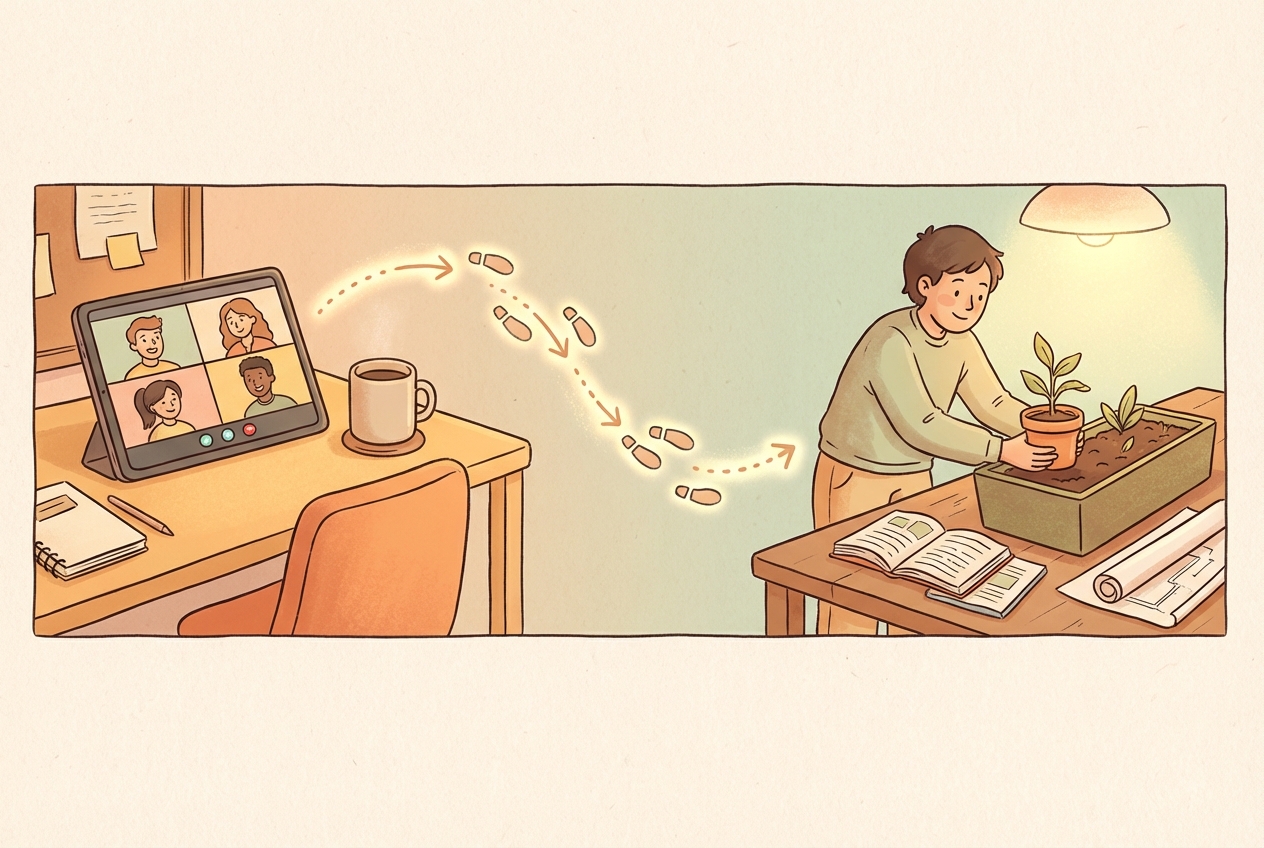
Natural transitions already exist in your day. Use them as triggers for brief disconnection.
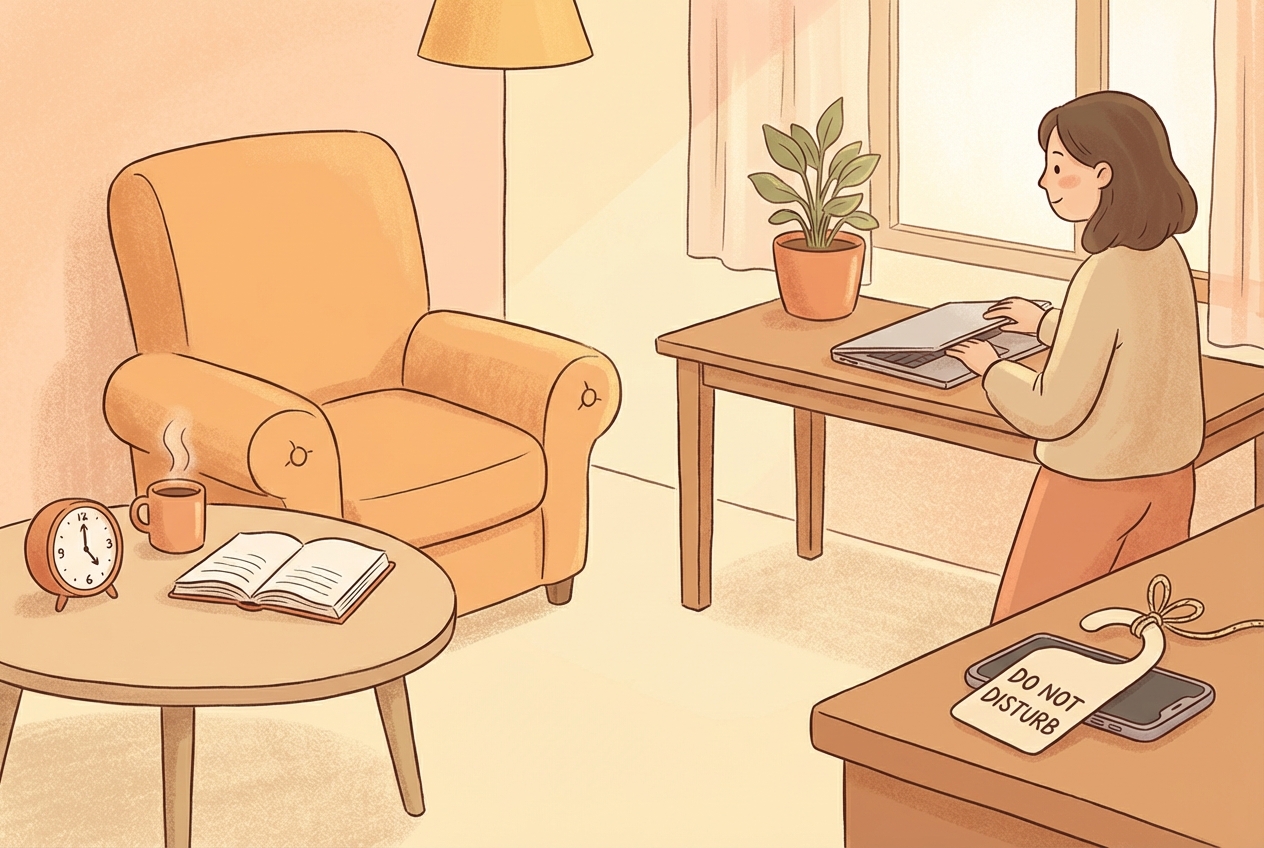
Before entering a meeting, leave your phone at your desk
During your commute home, keep devices in your bag for the first five minutes
After finishing a meal, wait five minutes before checking messages
When you wake up, stay phone-free until you've used the bathroom
These moments don't require finding extra time. You're simply adding intention to transitions that already happen. The habit stacks onto existing routines, making it sustainable.
Brief daily detoxes create compound effects over weeks and months. Your brain adapts to regular periods of low stimulation. Neural pathways for sustained attention strengthen while compulsive checking weakens.
Your attention span isn't fixed. It responds to how you train it. Constant digital stimulation trains your brain to expect rapid novelty. Regular breaks train it to tolerate, even enjoy, slower-paced activities.
People who practice consistent micro-detoxes report better concentration during work tasks. They read longer without distraction. They listen more attentively in conversations. These improvements emerge gradually but become noticeable within two to three weeks.
Social media often amplifies negative emotions. Comparison, outrage, and anxiety flourish in digital spaces. Stepping away regularly prevents these emotions from accumulating.
You gain perspective during breaks. That inflammatory post seems less urgent after five minutes away. The comparison spiral loses momentum when you're not feeding it. Your emotional baseline stabilizes because you're no longer riding constant digital waves.
Reduced reactivity to online provocations
Greater awareness of emotional states
Improved mood stability throughout the day
Better sleep from reduced evening screen exposure
Short-term willpower doesn't build lasting change. You need a system that works even when motivation fades. Start with one five-minute break daily, ideally at the same time. Set a phone alarm with a label like "Reset" to remind yourself.
Track your breaks with a simple tally mark on paper. This creates accountability without adding another app to your life. After two weeks of consistency, add a second daily break. Build gradually rather than attempting dramatic changes that won't stick.
The power of a brief digital detox extends beyond those five minutes. You're training your brain to recognize that constant connectivity isn't required. You're proving to yourself that you can control your attention rather than surrendering it to algorithms.
Your phone will still be there when you return. The notifications will wait. But you'll approach them from a calmer, more focused state. That shift changes everything about how technology fits into your life. Five minutes isn't much. It's also more than enough to reclaim your mental clarity, one break at a time.