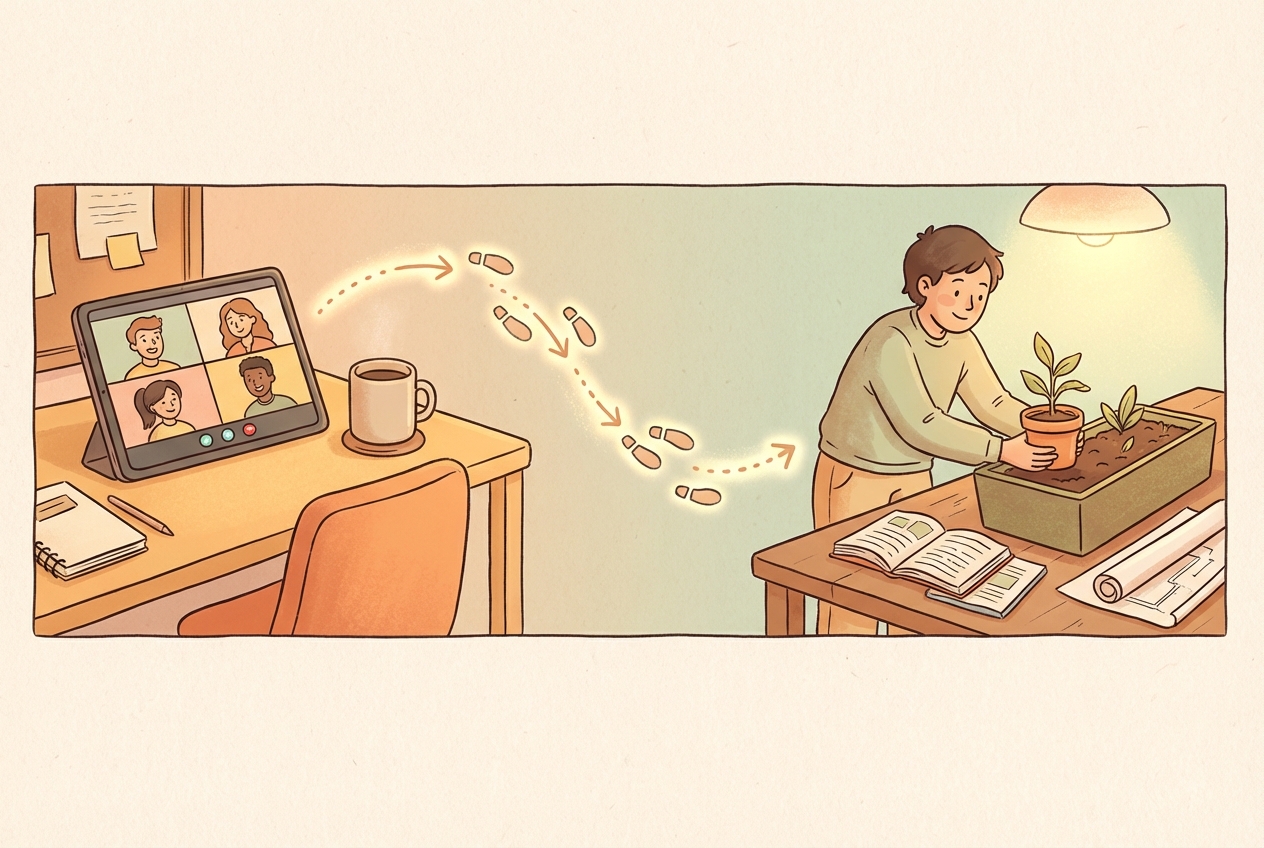

The calendar fills with meetings. The commute consumes hours. Family obligations multiply. Mental health support falls to the bottom of the priority list. This pattern defines modern professional life. Traditional therapy requires weekly appointments, travel time, and rigid scheduling. Most working adults cannot accommodate these demands. The result is a growing gap between mental health needs and available support. Cohera offers a different approach. The platform delivers therapeutic support on a flexible schedule, removing the barriers that prevent busy individuals from accessing care. Mental wellness becomes possible without sacrificing professional commitments or personal responsibilities. The question shifts from whether support fits into a packed schedule to how quickly that support can begin.
Professional demands have intensified over the past decade. Remote work blurred boundaries between office and home. The expectation of constant availability creates persistent stress. Mental health needs increase while time for self-care decreases.
Standard therapeutic models assume clients have predictable schedules. Appointments occur at fixed times, typically during business hours. This structure creates immediate conflicts.
Weekly sessions require 60-90 minutes including travel
Cancellation policies penalize schedule changes
Waitlists extend for weeks or months
Office locations rarely align with work or home
Evening and weekend availability remains limited
A marketing director with client calls across time zones cannot guarantee Thursday at 2 PM. A surgeon with unpredictable procedures cannot commit to consistent weekly slots. The traditional model excludes these individuals by design.
Postponing mental health support carries measurable consequences. Stress compounds over time. Coping mechanisms become less effective. Professional performance declines. Relationships suffer strain.
Research indicates that untreated anxiety and depression cost employers approximately $1 trillion annually in lost productivity. Individual costs include career stagnation, health complications, and diminished quality of life. The busy professional who delays therapy often experiences exactly the burnout that therapy could have prevented. Waiting for a less hectic period rarely works. That period seldom arrives.
Cohera addresses the fundamental mismatch between traditional therapy structures and modern schedules. The platform operates on user terms rather than provider availability.
Asynchronous communication removes the requirement for simultaneous availability. Messages can be sent at any hour. Responses arrive within defined timeframes. This model accommodates:
Early morning reflection before household activity begins
Late evening processing after work concludes
Weekend engagement during rare quiet moments
Travel periods when traditional appointments would be impossible
The therapeutic relationship develops through accumulated exchanges rather than isolated sessions. Continuity improves because communication happens consistently rather than weekly.
Physical therapy offices require travel. Urban professionals may spend 30-45 minutes reaching an appointment. Suburban and rural residents face longer journeys. This travel time doubles the actual commitment required.
Cohera eliminates geographic constraints entirely. Support happens wherever the user happens to be. A hotel room during a business trip works as well as a home office. The platform transforms any private space into a therapeutic environment. No parking searches. No waiting room delays. No schedule disruption from traffic or transit issues.
Mental wellness does not require hour-long blocks. Brief, consistent engagement often produces better outcomes than sporadic extended sessions.
Morning hours offer unique psychological advantages. The mind processes overnight. Fresh perspective emerges. A brief check-in before the day begins can establish intention and awareness.
Five to ten minutes of therapeutic engagement pairs naturally with existing routines. The time typically spent scrolling news or social media redirects toward mental health. Coffee becomes an opportunity for reflection rather than passive consumption. Cohera delivers support that fits these compressed windows without requiring schedule restructuring.
Midday pauses exist in most schedules. Even demanding roles include brief intervals between obligations. These moments represent untapped therapeutic potential.
A fifteen-minute lunch break can accommodate meaningful engagement with the Cohera platform. Processing morning stress before afternoon demands creates psychological separation. The workday becomes two manageable segments rather than one overwhelming stretch. This approach transforms existing schedule gaps into wellness opportunities.
Generic mental health advice fails because individual circumstances vary dramatically. Cohera adapts to specific needs, schedules, and communication preferences.
The platform learns engagement patterns over time. Users who respond best to morning prompts receive morning outreach. Those who prefer evening reflection get evening support. Communication frequency adjusts based on current stress levels and available time.
High-pressure periods trigger increased check-ins
Stable phases allow reduced engagement without concern
Travel schedules prompt adjusted timing
Personal preferences shape interaction style
This personalization means support intensifies when most needed and recedes when circumstances allow. The user controls the pace. The platform responds accordingly.
Complex systems discourage consistent use. Cohera prioritizes simplicity in every interaction. The technology serves the therapeutic process rather than complicating it.
Traditional therapy requires coordination between multiple calendars. Cohera removes this friction entirely. Access happens immediately. No scheduling negotiations. No back-and-forth emails. No waiting for confirmation.
The platform provides:
Immediate access upon signup
No appointment booking required for asynchronous support
Optional live sessions scheduled with minimal lead time
Automatic reminders based on user preferences
Simple rescheduling without penalty
This simplicity removes excuses. When access requires only opening an application, the barrier to engagement drops dramatically.
Privacy concerns legitimately prevent some individuals from seeking mental health support. Cohera addresses these concerns through comprehensive security measures.
All communications use end-to-end encryption. No data sells to third parties. Conversations remain confidential between user and provider. The platform meets healthcare privacy standards.
This security enables engagement from any location. A quick check-in from an office becomes possible without concern about data exposure. Travel support happens without network security worries. Privacy protection makes flexible access genuinely practical rather than theoretically possible.
Occasional therapy sessions produce limited lasting change. Sustainable mental wellness requires consistent engagement over time. Cohera enables this consistency by removing the obstacles that typically interrupt therapeutic relationships.
The platform transforms mental health support from an event into a practice. Brief daily or weekly engagement builds cumulative benefit. Skills develop through repeated application rather than sporadic instruction. The therapeutic relationship deepens through ongoing communication.
Busy professionals who previously abandoned therapy due to scheduling conflicts find a sustainable alternative. Support adapts to life circumstances rather than demanding life adapt to support. Career advancement, family obligations, and mental wellness coexist rather than compete.
The question of being too busy for therapy dissolves when therapy fits the available schedule. Cohera delivers this flexibility without compromising therapeutic quality. Mental health support becomes as accessible as the device already in hand.
The path forward requires only the decision to begin. Schedule constraints no longer serve as valid barriers. Support awaits whenever readiness arrives.