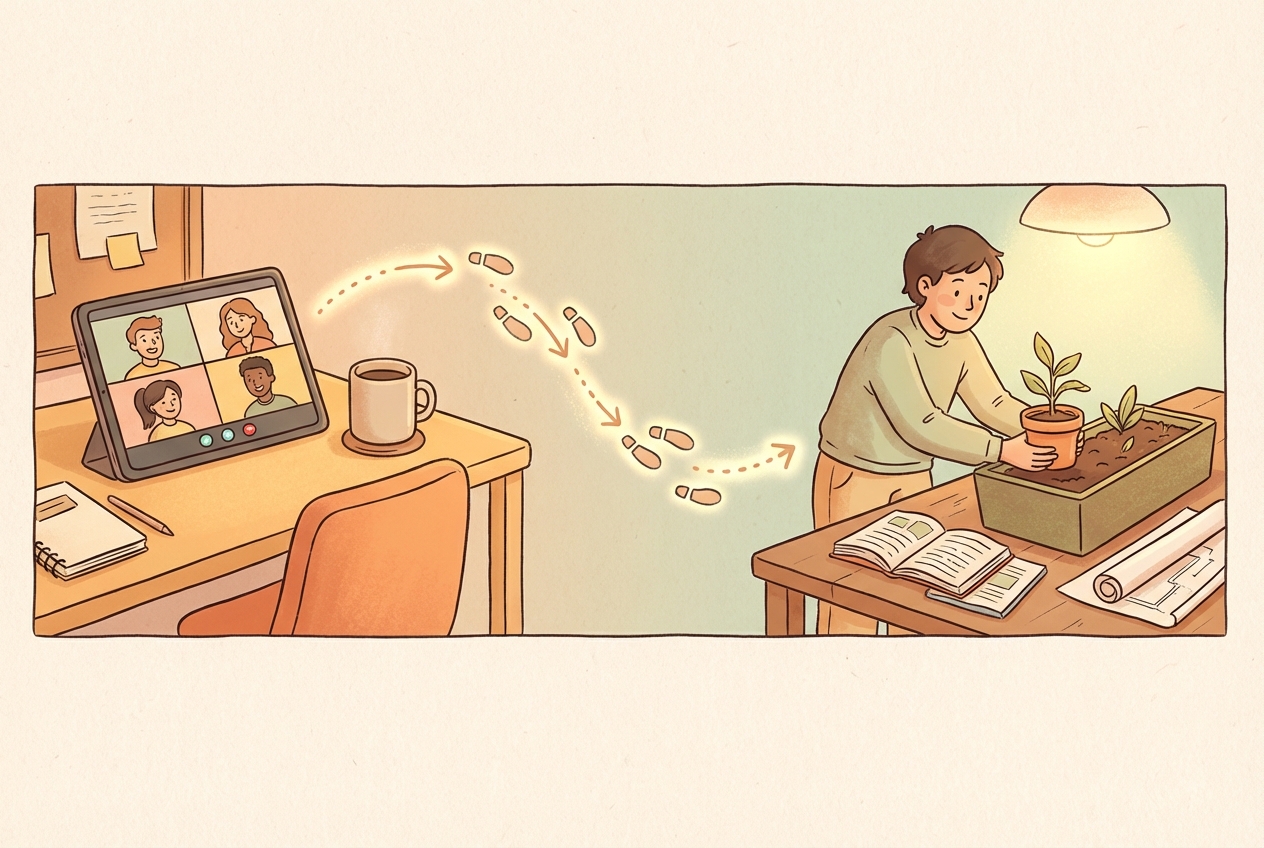
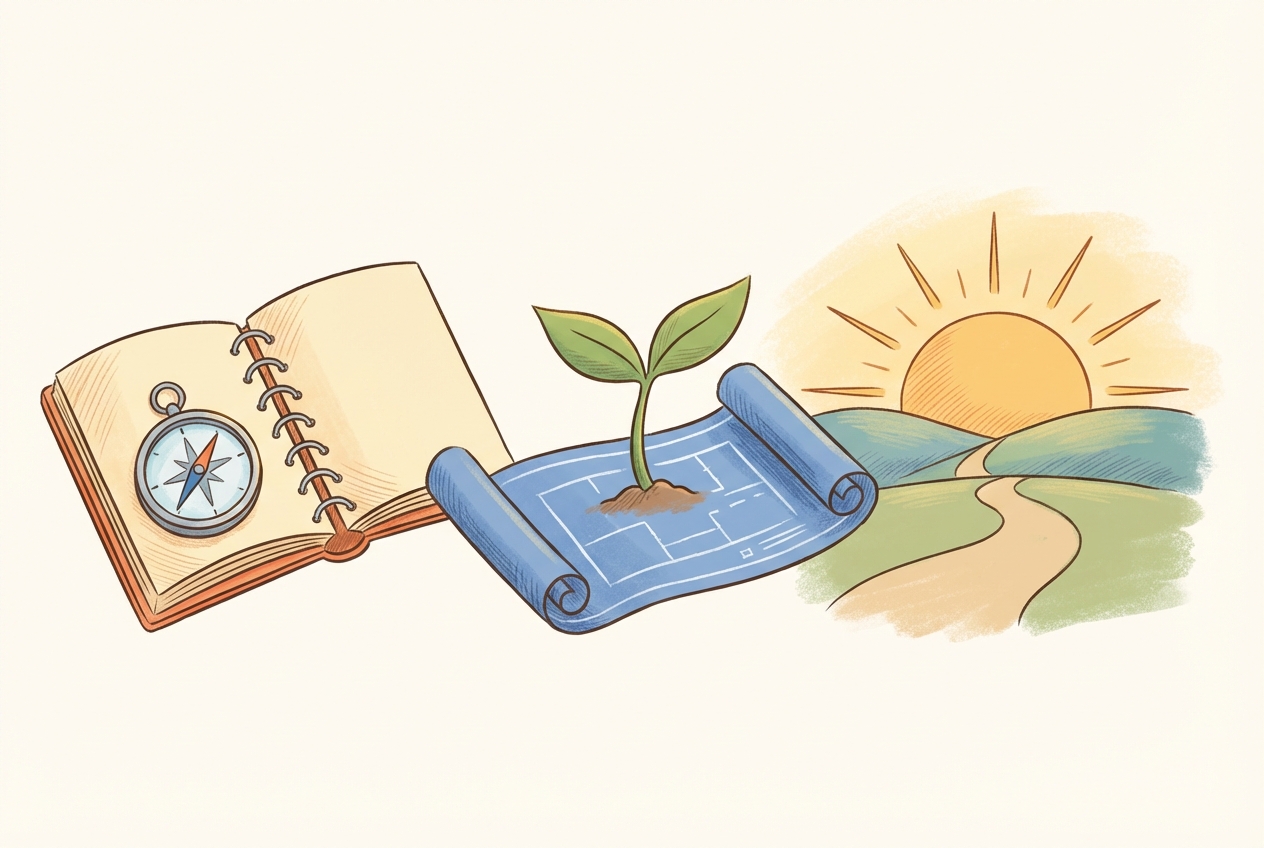
Most people drift through life reacting to whatever lands in their inbox, their calendar, or their mood. They mistake busyness for progress and wonder why January's resolutions dissolve by March. The difference between those who grow and those who stagnate rarely comes down to talent or luck. It comes down to clarity. Your personal blueprint for clarity becomes the foundation for setting intentions and achieving growth that actually sticks. Think of it as your operating system for life: a customized framework that helps you decide what matters, filter out noise, and move toward meaningful goals without burning out. This isn't about rigid planning or productivity hacks. It's about understanding yourself deeply enough to design a life that works with your nature, not against it. The blueprint you'll build here adapts to your circumstances while keeping you anchored to what genuinely matters. You'll learn to audit your values, set goals that compound over time, and create systems that survive the chaos of real life.
Before you can chart a course, you need to know where you're starting. Most people skip this step entirely. They set goals based on what they think they should want rather than what actually energizes them. Your north star isn't a destination. It's a direction that pulls you forward even when motivation fades.
Values aren't abstract concepts you list on a vision board. They're revealed through your choices when no one's watching. Start by examining where you actually spend your time and money. These patterns tell the truth your aspirations might obscure.
Review your calendar from the past month and categorize activities
Note which tasks you procrastinate on versus which you tackle eagerly
Identify moments when you felt most alive and engaged
Consider what you'd do differently if money weren't a concern
Your stated values and your lived values often conflict. Someone might claim family comes first while consistently choosing work over dinner at home. This gap isn't a character flaw. It's valuable data. Closing it requires honesty, not judgment.
Your mind accumulates debris like a house accumulates junk mail. Outdated beliefs, inherited expectations, and unprocessed emotions create static that drowns out clarity. Identifying this clutter is the first step toward clearing it.
Common roadblocks include perfectionism disguised as high standards, fear of judgment masked as practicality, and past failures that became permanent beliefs. Write down the thoughts that surface when you imagine pursuing something meaningful. The objections reveal the obstacles.
"I'm not the kind of person who..."
"People like me don't..."
"It's too late to..."
These phrases point directly at the mental models holding you back. They're not facts. They're stories you've told yourself so often they feel true.
Growth without strategy is just motion. You can work hard for years and end up exactly where you started. A strategic framework turns effort into progress by ensuring your daily actions connect to your larger vision.
Big goals inspire but small goals deliver. The gap between "write a book" and "write 300 words today" is the difference between dreaming and doing. Micro-goals work because they're too small to trigger resistance yet compound into significant results.
Break annual goals into quarterly milestones
Convert quarterly milestones into weekly targets
Translate weekly targets into daily actions
Make daily actions specific and measurable
A goal like "get healthier" becomes "walk 6,000 steps today." The specificity removes decision fatigue. You either did it or you didn't. This clarity for setting intentions and achieving growth transforms vague aspirations into concrete progress.
New habits fail when they float untethered from your existing routine. Habit stacking anchors fresh behaviors to established ones. You already brush your teeth every morning. That automatic action becomes a trigger for something new.
The formula is simple: "After I [current habit], I will [new habit]." After I pour my morning coffee, I will write three things I'm grateful for. After I sit at my desk, I will review today's top priority. The existing habit provides the reminder your willpower would otherwise need to supply.
Clarity isn't a permanent state you achieve. It's a practice you maintain. Your mind will cloud over repeatedly. The goal isn't to prevent this but to notice it quickly and clear the fog before it thickens.
Reflection without structure becomes rumination. Scheduled reflection becomes insight. Build specific intervals into your week where you step back and assess.
Daily: Five minutes each evening reviewing what worked and what didn't
Weekly: Thirty minutes assessing progress toward your micro-goals
Monthly: Two hours examining whether your actions align with your values
Quarterly: Half a day evaluating your north star and adjusting course
These intervals catch drift before it becomes disaster. A week of misaligned effort is recoverable. A year of it is devastating. Regular reflection keeps small corrections from becoming major overhauls.
Your mental clarity depends heavily on what you consume. The average person encounters thousands of messages daily, each competing for attention. Most of this input adds noise without adding value.
Audit your information diet ruthlessly. Unsubscribe from newsletters you never read. Unfollow accounts that trigger comparison or anxiety. Replace passive scrolling with intentional learning. Your attention is finite. Protect it like the precious resource it is.
Consider implementing information boundaries. Check email twice daily instead of constantly. Batch news consumption into a single session. Create phone-free zones in your home. These constraints feel restrictive initially but quickly become liberating.
Ideas without implementation are entertainment. Your blueprint only matters if it translates into changed behavior. This section bridges the gap between knowing and doing.
Routines fail when they demand too much willpower. Sustainable routines work with your energy patterns, not against them. Track your natural rhythms for a week. Note when you feel sharp versus sluggish.
Schedule demanding cognitive work during peak energy hours
Reserve low-energy periods for administrative tasks
Build buffer time between activities for unexpected demands
Include deliberate rest as a scheduled priority
The best routine is one you'll actually follow. An elaborate morning ritual means nothing if you abandon it after two weeks. Start smaller than feels significant. Consistency beats intensity every time.
Measurement matters but obsessive tracking backfires. When you check metrics constantly, you optimize for short-term fluctuations instead of long-term trends. The scale's daily number tells you less than its monthly trajectory.
Track leading indicators, not just outcomes. If your goal is writing a book, track words written rather than just chapters completed. Leading indicators show whether your system is working before results appear. They provide early feedback that keeps you on course.
Limit tracking to what genuinely informs decisions. Data you collect but never act on is just clutter with numbers attached.
Your blueprint isn't carved in stone. It's written in pencil. Major life transitions: new jobs, relationships, children, losses, and relocations all require recalibration. The framework stays constant but the details shift.
When transition hits, return to fundamentals. Audit your values again. They may have evolved. Reassess your north star. It may have moved. The practices you developed create stability during instability. They're the constant that helps you navigate change.
Expect your blueprint to undergo major revisions every few years. This isn't failure. It's growth made visible. The person who created your original blueprint no longer exists. Honor their work by updating it for who you've become.
Building your personal blueprint for clarity isn't a weekend project. It's a lifelong practice. The initial framework takes shape in weeks. Mastering it takes years. Results compound slowly at first, then accelerate.
The gap between who you are and who you could become closes through small daily choices. Each aligned action deposits into an account that pays compound interest. Each misaligned action withdraws. Over time, the balance becomes your life.
Start today with a single step. Audit one area of your values. Set one micro-goal for this week. Schedule one reflection interval. These small beginnings contain everything needed for transformation. The blueprint exists to be built, revised, and lived. Your clarity awaits your commitment to finding it.